
The General Strike – 100 years ago and largely forgotten
The General Strike – 100 years ago and largely forgotten
At one minute to midnight on May 3rd 1926 the Trade Union Congress called the first and only General Strike in British history.
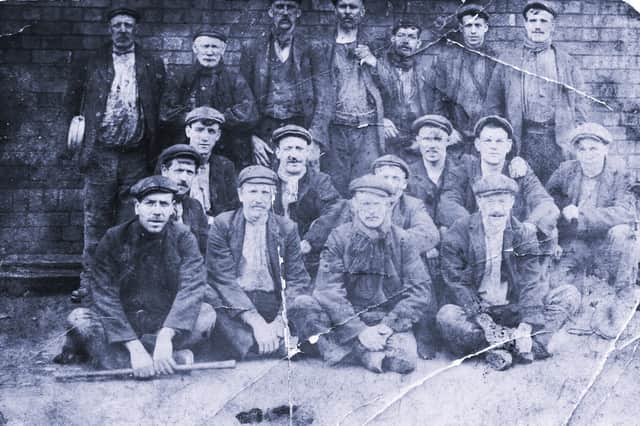

Coal miners throughout the country were locked out of the collieries by the coal owners and other unions went on strike to support them in their fight to stop wage cuts and an increase in hours worked per day.
Such an important Soviet revolutionary and politician as Leon Trotsky in Russia fully expected the strike to lead to a revolution in Britain, as had happened in his own country just nine years before.
There is very little evidence that this was ever a realistic possibility but the apparent threat was used by the Conservative government and many national newspapers to discredit the strikers and their political supporters.
The strike lasted just nine days for many of the participants but a great majority of the coal miners involved continued with it until close to the end of the year.
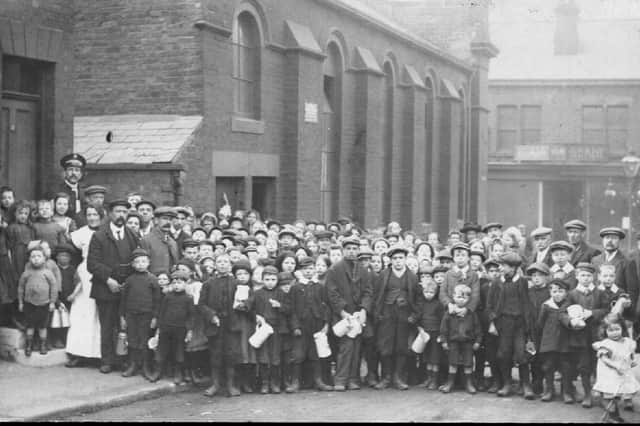
At the heart of a coal mining area, Rotherham was significantly impacted by the strike and memories of it stayed fresh for many involved families to the end of the 20th century.
As with many great national events the memories that remained for decades often focused on quite small and inconsequential details.
In this anniversary year it is fascinating to consider some of these memories in the light of the present day.
As with many of the economic ills of the 1920s and 1930s, critical changes in Britain had occurred as a result of the First World War.
Coal miners did comparatively well for wages during the war, coal output being critical for wartime production, but at the end it was realised that overseas markets for British exports had shrunk drastically, even disappeared.
Also, much mining infrastructure was in poor condition, perhaps out-dated.
Between 1919 and 1926 miners’ weekly wages fell, often by as much as half.
Levels of poverty mounted with reports of children absent from school because of a lack of footwear and children not knowing about sitting down to eat a meal at a table because of a shortage of chairs in the home.
Many family memories focused on coal-picking and soup kitchens, ways in which the mining communities survived the hardships of the strike.
Coal-picking happened when there were mine stoppages.
Numerous miners and their families went to areas (usually local) where coal could be gathered from outcrops or tip heaps.
Charles Brett, a former mayor of Rotherham, wrote many years later about what he had to do both in the 1921 national coal strike and the General Strike, when he was four and nine respectively.
“We had to help with getting coal from the outcrops which our fathers had dug in an area around Tinsley Park Colliery.
“The coal was heaped around the holes and if it hadn’t been cleared away during the day we had the job of watching it during the night because other gangs of men could raid it.
“Our fathers went home to get some sleep.
“We were very scared!”
Once their fathers returned they went home and then to school for breakfast.
Henry Lowry could remember: “People going down to a stream at Aldwarke, near Parkgate, and digging some coal out there during the strike.”
Muriel Sykes’ memories were slightly different: “My dad was a miner. He had some work during the strike because he was a ‘bobby’ on the tip heap to Aldwarke Main to stop people digging for coal there.
“Both his brothers were miners at the time and had no work.”
It appears that few photos of the General Strike were taken in the local area (unlike the huge number of photos taken in London of the titled and well-to-do people who volunteered to help the government and lessen the strike’s effects).
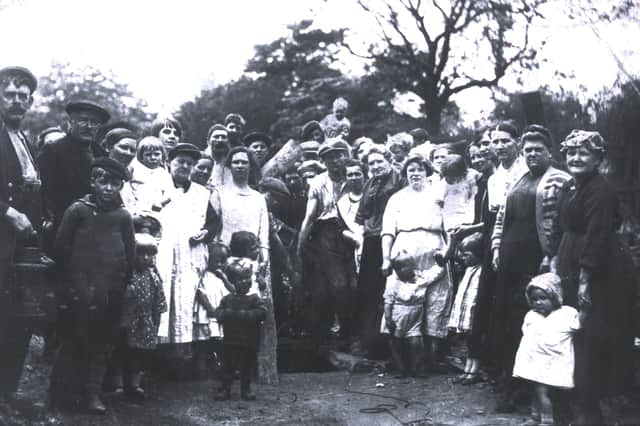
Edna Vaughan grew up in Church Street behind the parish church at the top of Rawmarsh Hill.
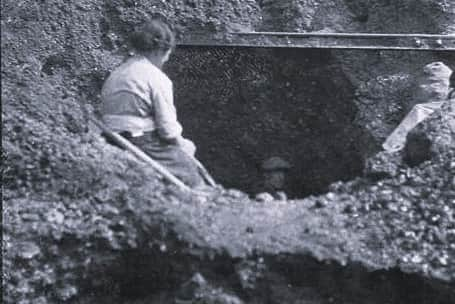
She had very clear recall of one local aspect of the General Strike: “I can remember when they dug that mine in Church Street to get coal.
“It went down quite deep but it started filling with water almost straight away so they didn’t get much coal out of it.
“The sides started coming in so it as too dangerous.
“There was a bucket rigged up over the hole.
“It was a novelty though, everyone came round to have a look.
“There was a lot of coal there on that land but it was too wet.”
Seventy five years later, and very unusually, Edna still had a group photo of her neighbours gathered round the hole and she showed it to me with pride.
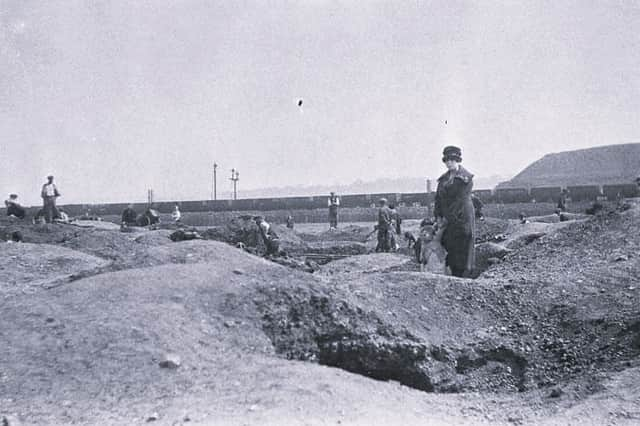
Similar activities were taking place on the site of Car House Colliery in Greasbrough and photos have survived from 1926 that show that both men and women were involved in the coal-picking and that it must have been a nerve-wracking experience.
There was a report in the local press on 28th July 1926 about Ernest Hunt, just 18 years of age, who was killed while picking coal near the Manor in Sheffield.
He was on a tip known as Manor Pit Bank and has excavated a hole about six feet deep.
Tragically the sides of the hole collapsed and buried him.
Despite frantic attempts by other pickers to save him, it was all in vain.
There are times when you are investigating past events that you discover information that really surprises you.
Joyce Hawley found out about the strike from her grandma.
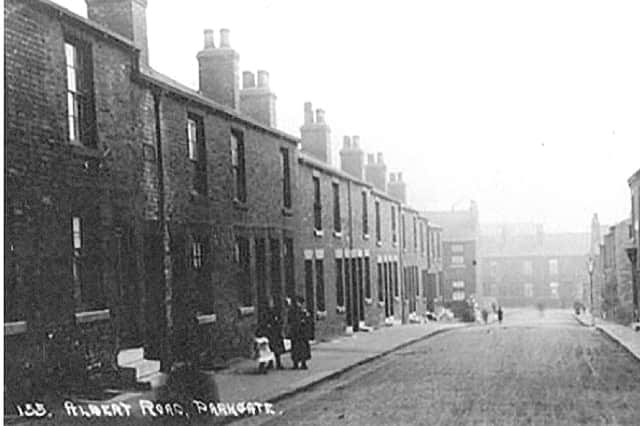
She said: “Grandma told me that coal was short and my uncle dug a small pit near my grandma’s house in Victoria Road, Parkgate to get some coal.
“There were some steps from the yard to get into the pit.
“Everyone had to keep very quiet when the police came round so they didn’t hear the digging.
“They often did the mining at night to avoid the police catching them and the pits were that shallow you could hear the men working from inside the houses.
“My in-laws actually sold coal from their pit, which was nearby.
“Lorries used to come to collect the coal, they got so much.
“My mother-in-law said she never had so much money as when she was selling coal then.
“Victoria Road must have been like a rabbit warren underground.”
Providing food for the poorest families was seen by many in the local community as a priority.
Soup kitchens were set up in numerous places around Rotherham and district.
Sandhill Farm on Kilnhurst Road was one. Another was down in Parkgate where soup was supplied at St Paul’s Methodist Chapel on Broad Street.
Children often queued with a jug to take the soup home.
The Salvation Army helped with the distribution from their ‘Citadel’ close by.
Most of the miners continued their strike into the autumn but, driven by hunger and poverty, disillusioned and desperately disappointed, they eventually returned to work, to less pay and longer working days.
Much ended with their strike.
By 1931 432,000 miners were unemployed – 41.6 per cent of the workforce.
Is it all forgotten?