
Rare dragonfly takes up residence at Rotherham nature reserve
Rare dragonfly takes up residence at nature reserve
This summer may have been a challenging one for us humans, but it’s been a great one for the dragonflies at a popular nature reserve.
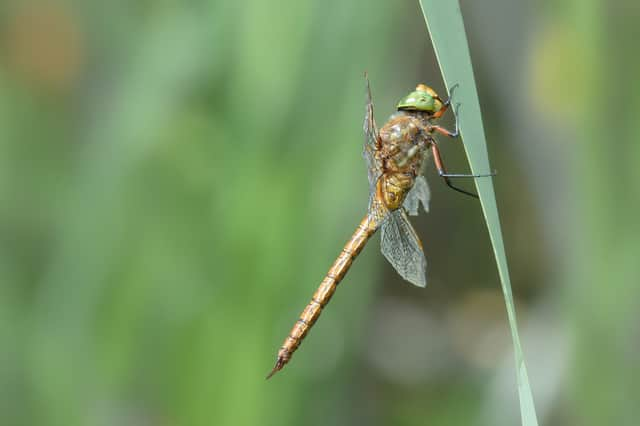

There has even been a rarity spotted at the RSPB’s Old Moor site at Manvers.
The first-ever sighting of the endangered Norfolk Hawker took place at the nature reserve on June 27 and there were four subsequent sightings in July.
The striking dragonfly has vivid green eyes and a warm brown body with a distinctive triangular yellow mark at the top of its abdomen.
Since the first sighting at RSPB Old Moor by a visitor, excitement has been growing as to which new dragonfly species might be spotted at the reserve next.
The reserve is already well-known for attracting rare birds such as the elusive bittern in its reedbeds, but the site plays host to many kinds of wildlife.
The discovery comes during what is shaping up to be one of RSPB Old Moor's best years for dragonflies, with 24 of the UK’s 58 dragonfly and damselfly species now recorded at the reserve – making it one of Yorkshire’s top places to see these spectacular insects.
RSPB Old Moor’s mix of reedbeds, open water, ponds, woodland and ditches provide ideal habitat for dragonflies, which spend much of their lives as aquatic insects before emerging as aerial hunters seen darting across wetlands during the summer months.
Dragonfly surveyor David Pritchard, who has been monitoring dragonflies at RSPB Old Moor since 2012 and is a volunteer with both the RSPB and the British Dragonfly Society, said he was pleased at the arrival of the rare species.
He said: “They were so geographically isolated for so long that people would travel to Norfolk just to see one.
“Having a Norfolk Hawker turn up on your doorstep is a bit like finding a European bird like the strikingly colourful hoopoe in your local park.
“It could also tell us something important about how these dragonflies are adapting.
“They were once thought to rely on a plant called Water Soldier for breeding, but for many years now, they have been appearing in places where that plant doesn’t exist. Scientific research back in 2011 showed that the species actually prefers sites where the aquatic plant community is abundant and diverse.”
Recent years have seen several southern dragonfly species expanding their range northwards, including the Hairy Dragonfly and Willow Emerald Damselfly, both now established breeders at Old Moor.
The Barnsley area recently celebrated its first-ever record of a Southern Migrant Hawker, another species gradually moving north.
Emma Tuckey, manager at RSPB Old Moor, said: “Dragonflies are one of the real highlights of summer at Old Moor.
“Whether you’re a keen wildlife watcher or simply enjoying a walk around the reserve, they’re impossible not to notice as they flit across the wetlands in flashes of blue, green and gold.
“Recording our first-ever Norfolk Hawker this summer is a wonderful milestone and a real tribute to the work of our staff, volunteers and supporters over many years.
“Healthy wetlands benefit so much more than birds, and it’s fantastic to see dragonflies responding so positively.
“As the UK continues to experience drier hotter summers, Yorkshire’s inland wetlands are an oasis for all kinds of species to thrive, without our reedbeds, ditches and ponds some of these dragonflies simply couldn’t survive.”
July and August are the best months to see dragonflies at Old Moor, when species including Common Darters, Migrant Hawkers and Emperor Dragonflies can be seen in their hundreds, particularly between late morning and mid-afternoon.
For more information about visiting RSPB Old Moor, go to rspb.org.uk/oldmoor