
‘Please don’t ask us to do it again’: The villages facing plans for a 60-year solar farm

“We have spent decades repairing the damage of the past. Please don’t ask us to do it again”
Residents who have spent decades reclaiming their countryside from coal mining fear another transformation. As Whitestone’s developers make their case for clean energy, what would one of Britain’s biggest solar schemes mean for the people living beside it?
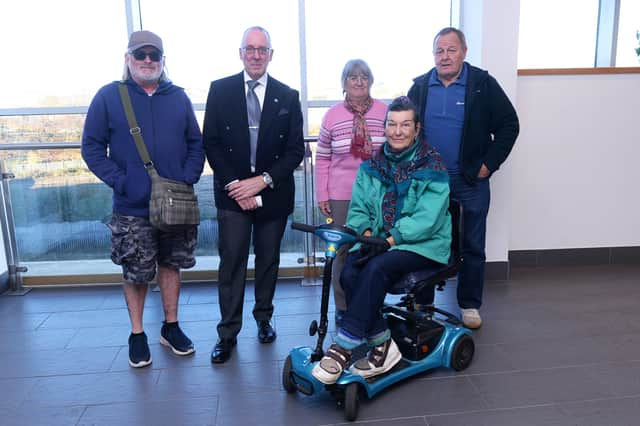

Julian Morley brought a piece of coal to the Whitestone Solar Farm hearing. He wanted the inspectors to understand what his community had already given.
The coal, he said, had come from Kiveton Park Colliery shortly before its closure in 1994. It represented more than a vanished industry - dust in people’s homes, damage to miners’ lungs and the spoil heaps that once dominated the landscape.
Since then, communities had spent decades repairing that damage, turning former industrial land into places to walk, meet and enjoy the countryside.
“We have spent decades repairing the damage of the past. Please don’t ask us to do it again,” the Harthill resident told the hearing.
His appeal was among the personal accounts heard during three days of proceedings into Whitestone, the proposed solar and battery-storage development across three areas between Rotherham and Doncaster.
For the applicant, Whitestone Net Zero Ltd, the project would help meet an urgent need for clean electricity and greater energy security. Its team says the design has changed following consultation, with fields removed, planting added and measures proposed to protect access and manage construction.
But residents asked inspectors to weigh those benefits against something harder to capture in a technical report: what familiar fields, paths and views mean to the people who live among them.
Speaking for Harthill with Woodall Parish Council, Mr Morley challenged the description of a development operating for 60 years as temporary.
“My granddaughter is seven years of age. She will be retired by the end of this period,” he said.
“For her, Whitestone would form part of the landscape for her home for almost her entire lifetime.”
For Mira Robinson, the countryside is a place to recover from experiences she described as deeply distressing.
In an emotional testimony, Ms Robinson told the hearing she had worked in intensive care and accident and emergency departments, and had helped on high-dependency and intensive care units during the Covid pandemic. She said those experiences had left her living with post-traumatic stress disorder.
Walking, running, cycling, swimming and kayaking were ways she looked after her physical and mental health.
“Our fields, trees, reservoirs, and canals are places where I can breathe, where I can move, where I can think, and where I can find calm,” she said.
She told the hearing that she recognised the importance of renewable energy, but urged inspectors to consider where projects were built and what changes to the countryside could mean for people who depended on it.
"You see a field, its empty. It's just a piece of land to some people. But to somebody else it's probably where they find peace, where they escape anxiety, where they manage trauma, and they simply enjoy being outdoors.
"Would you really take that away from us?"
Janette Gran, who has lived in Clifton and Conisbrough for 38 years, described how mobility difficulties made the countryside immediately around her home particularly important.
She said trips by mobility scooter along accessible routes such as Beacon Lane allowed her to enjoy 'spectacular' panoramic views and meet neighbours, helping her retain independence and social connections.
“This gives me and others the freedom to enjoy the countryside on our doorstep,” she said.
"Grotesque industrial roads of proposed solar panels and infrastructure would be devastatingly prominent. It would be a blight and infestation of such major proportions that no compensatory factors or screening could ever camouflage."
Ms Gran's concern was not simply whether a path remained open, but whether the experience that made it worth using would survive.
That distinction ran through the hearings. Residents argued that access beside panels, fencing and infrastructure could not be treated as equivalent to the open countryside they knew.
Lauren Clay, who had recently bought a home in Harthill with her husband, spoke about the future she had imagined there.
“When I imagine our future children growing up, I picture them walking across these fields,” she said.
She questioned whether planting could compensate for the loss of an expansive view, arguing that screening could itself change what residents valued.
The applicant says the development has been designed to 'improve and expand' public rights of way, with new hedges and trees to screen the panels and 14.5km of new paths for walkers, cyclists and horse riders.
Sam Griffiths, speaking on its behalf, told the hearing that the aim was to avoid impacts where possible and minimise those that remained. Entire fields had been removed following engagement with communities, he said, and the layout included separation from homes and public rights of way.
He said assessments considered people moving along routes, not simply views from fixed points. The applicant intends to submit an updated landscape and visual assessment by November 24 following further discussions with Doncaster and Rotherham Councils.
Residents also challenged why agricultural land was proposed when roofs and previously developed sites might offer alternatives.
Angus Walker, for the applicant, said it considered 37 brownfield sites and 28 industrial areas. Simon Gillett said brownfield options were too small or earmarked for other uses.
Mr Gillett added that the applicant understood that the closed Liberty Steel sites in Brinsworth and Rotherham were intended for redevelopment for other employment purposes, and maintained there was no suitable brownfield alternative in the area.
He said the applicant supported rooftop solar but argued it was needed alongside large-scale solar farms, rather than as a replacement, to deliver the electricity required within national timescales.
Residents also feared construction lorries on village roads, disruption to businesses, risks for horse riders and additional pressure on places they already considered congested.
The applicant says its assessment considers peak construction activity and concludes that the remaining traffic effects would not be significant in environmental-assessment terms. It proposes agreed delivery routes, scheduling to avoid network peaks, monitoring and contractual penalties for non-compliance.
Its team said engineers had visited sites and road-condition checks would take place before construction. It also promised further written responses on detailed concerns about the A630 and a briefing note drawing together its equestrian proposals.
Wildlife was another dividing line. Residents described birds and animals using the surrounding farmland and questioned whether changes across several developments had been adequately considered together.
The applicant predicts overall gains in habitat, hedgerow and watercourse units, with a commitment to at least 10 per cent biodiversity net gain. It says surveys, habitat management and construction safeguards underpin its approach.
Those calculations do not settle every dispute about individual species or places. Speaking for Rotherham and Doncaster councils, Duncan McLoughlin sought clarification about the amount, location and security of replacement skylark habitat at Brampton Common, while the applicant described grassland management and potential additional breeding habitat.
The hearings at Rotherham’s New York Stadium did not decide whether Whitestone should go ahead. They opened the examination of competing evidence, with inspectors ultimately making a recommendation to the Secretary of State, who will decide the application. Whitestone Solar Farm
At the end of the open-floor hearing, Mr Walker thanked residents and said the applicant would respond in writing to points not already being addressed in its replies to their representations.
He also invited suggestions for improving the scheme if it proceeded, saying that contributing ideas would not dilute anyone’s opposition.
For residents such as Mr Morley, however, the question remained intensely personal. A proposal described in megawatts and mapped boundaries could shape the landscape his seven-year-old granddaughter knew for almost her whole life.
Whitestone explained: a solar scheme on a national scale
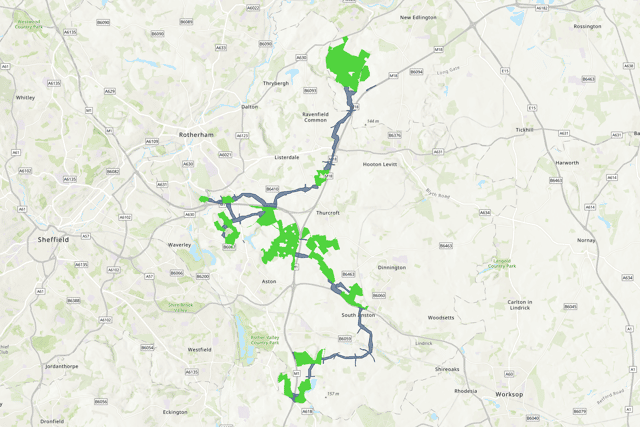
Whitestone would be one of the UK’s largest solar developments, with a proposed 750MW grid connection and an operating life of 60 years.
The plans comprise three main solar areas between Rotherham and Doncaster, alongside battery storage, substations and underground connecting cables.
Applicant Whitestone Net Zero Ltd, part of Green Nation, says the scheme would contribute to cleaner electricity supplies and greater energy security.
Who decides?
Whitestone is a Nationally Significant Infrastructure Project. Planning inspectors will examine the evidence and make a recommendation to the Secretary of State, who will decide whether to grant development consent. Rotherham and Doncaster councils contribute evidence but do not make the final decision.
What the developer says
"National energy policy is clear on the need for large scale solar developments to reduce energy costs, support energy security, and help in the fight against climate change. Recent geopolitical changes and extreme weather events have only further demonstrated the urgent need to bring forward renewable energy developments in the UK as quickly as possible. A mix of rooftop solar, large scale solar and other renewables is needed to meet future energy needs.
"The starting point for Whitestone was the available capacity to connect to the National Grid. Once we had secured a grid connection, we sought land within a 12 km radius that would be suitable for solar development. We sought to avoid environmental designations and the highest quality agricultural land and also considered brownfield and industrial sites.
"We presented our project for two rounds of consultation with technical experts, local authorities and local communities. These consultations resulted in significant changes to the proposed development, to ensure that the final proposals are sensitive to local communities and the environment.
"We look forward to continuing to engage with the local authorities, technical bodies and residents as the examination continues to identify potential issues and mitigate them where possible."