
The role of a Rotherham earl in America's fight for freedom
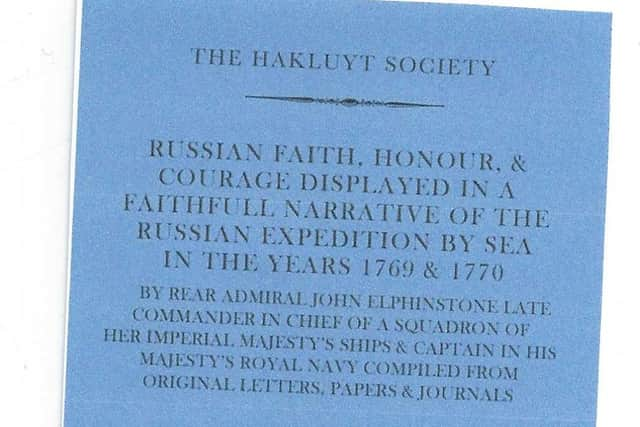
IN 2019 Professor Elena Smiianskaia and Julia Leikin were researching Russian maritime warfare in the eastern Mediterranean and, in particular, the role of John Elphinstone, a Scottish Admiral in the employ of Catherine the Great of Russia.
Julia Leikin is an American born of Russian extraction who worked with Elena at the Higher School of Economics in Moscow.
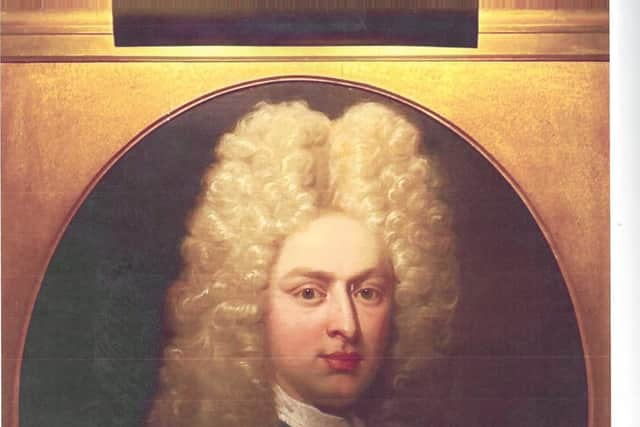

In their research they had kept coming across the elusive figure of Thomas Howard, Earl of Effingham.
Intrigued by this man they do what most people do today and googled him and came across a website for Boston Castle.
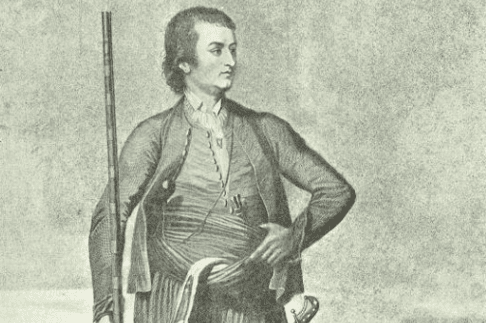
They knew that he was an aristocrat so a castle was his obvious home!
The website provided a contact in the form of Janet Worrall, then chair of the Friends of Boston Castle, who fortunately was something of an expert on the man who built the castle.
In fact, the castle was what was known as a Belvedere- ring any bells?
A Belvedere is a lodge high on a cliff overlooking a valley, in this case, the beautiful Canklow valley, or at least it was in the days it was built.
Janet, knowing that his Rotherham residence, Thundercliffe Grange, still existed contacted the Grange and the pair were invited to Rotherham to visit and stay overnight so they could find out more about the relatively mysterious Thomas Howard.
Many conversations were had, the stereotype of the hard drinking Russian being confirmed!
The conversations centred around the Earl of Effingham so we were unable to investigate another area of Elena’s expertise, namely Russian love potions in the Seventeenth Century!
Leaving behind a depleted wine rack they returned to London and Moscow knowing much more than most people in Rotherham.
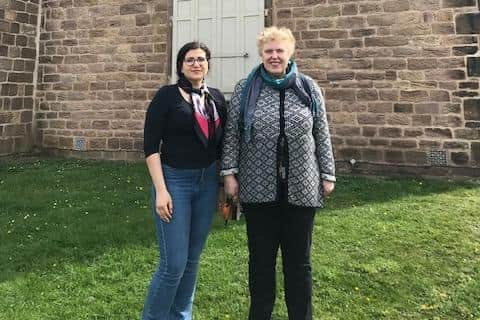
Both our guests were members of the Royal Historical Society and they went on to publish their experiences in Rotherham.
They said that local historians in Rotherham proved to be a rich source of information, and were best placed to see all the pieces of the puzzle, and to assemble them in a way that reveals the bigger picture of Thomas Howard’s life.
From our conversations we were able to learn about the various aspects of Thomas Howard’s life – something no academic study had been able to provide.
“The work of local historians is also a reminder of those of us who try to chase the grand narrative that history works on multiple scales… this is how we benefitted from the work that has been carried on in Rotherham: it provided insight into this eccentric figure and revealed connections between several imperial projects” such as Russian foreign policy, the American Revolution and Britain’s Caribbean colonies, connections nobody knew existed.
As the 250th anniversary of the declaration of American Independence looms, the National Archives are organising an exhibition to commemorate the signing of the Declaration of Independence, while various genealogy magazines including Who Do You Think You are having articles on the British response to the American Revolution.
I doubt that they will feature Thomas Howard, Earl of Effingham and Lord of the Manors of Rotherham and Kimberworth and yet he played a significant part.
Convinced that the Americans had a just cause he organised a ball at Holmes Hall, his first home in the town, to raise funds to support American Prisoners of War.
He had already begun the construction of his belvedere known as the house on the hill when, at the end of 1773, a group American colonists took issue with London imposing a tax on tea.
Raising the cry of no taxation without representation they dumped imported tea into Boston Harbour.
Thomas Howard declared his support for the colonists by naming his belvedere Boston Castle.
Legend has it that he prohibited the drinking of tea in the building.
By the July of 1776 the representatives of the various colonies gathered in Philadelphia were about to publish the Declaration of Independence.
Much of the philosophy behind it came from Tom Paine’s pamphlet Common Sense.
Surprisingly, 12 years later, Paine would spend six months at the Walker Iron Works in Masbrough.
From there he wrote to his friend, Thomas Jefferson, that Walkers were the best ironworks in the country.
In his diary he tells us that while in Rotherham he met with aristocrats sympathetic to the American cause.
Given that his friend, John Foljambe, was Effingham’s lawyer it seems almost certain that the Earl and the radical would have met.
While the colonies debated their future at Philadelphia, the King had decided to crush the rebellion and ordered Effingham’s regiment to embark for New York.
This should have been a problem for Thomas, but, as always in his life, he was a man of principle.
He addressed the House of Lords stating that England did not have the right to extend the power of taxation to the colonies and then went on to resign his commission.
He said when the duty of a soldier becomes inconsistent I shall always think of myself obliged to sink the character of the soldier into that of the citizen.
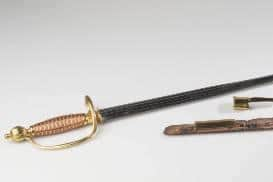
Some commentators have said that he then broke his sword across his knee.
However, all newspaper reports commented on how measured the speech was so such a dramatic action was unlikely to have occurred.
His words resonated throughout Britain and Ireland with newspapers highlighting his resignation, making, for a brief time, Rotherham the centre of opposition to the King.
He received plaudits from all around the country.
Surprisingly, Effingham was not court martialled.
He was also a patriot which was evident when, with the conflict still raging, the American privateer, John Paul Jones threatened Hull.
With Rockingham he hastened to Hull to repel the American though the feared attack did not materialise.
In America the forces of the Crown suffered a number of defeats culminating in a humiliation at Yorktown.
In the face of this Rockingham became Prime Minister and the King was forced to accept that the colonies were lost.
Initially Effingham was touted as a possible ambassador to the new nation.
However, the government took a more diplomatic route by appointing the American-born Sir John Temple, a former governor of New Hampshire, to the post of Consul General.
The first American ambassador to the Court of St James was John Adams who was later to succeed George Washington as the second president.
In her diaries his wife Abigail expressed her nervousness in coming to England where she anticipated there would be a hostile reception.
This fear was mitigated by Catherine, Countess of Effingham who called on her in London.
Abigail was greatly impressed by her with her knowledge of world affairs and thought her a very congenial companion.
Towards the end of the eighties Thomas was becoming concerned for his health.
At one of his last appearances in the House of Lords, newspapers reported that he was emaciated and his hair had gone white.
In the belief that a more congenial climate might be beneficial he sought and gained the Governorship of Jamaica, being also appointed Captain General of the island.
The appointment carried with it a salary of £800 a year.
Waiting for him was a Colonial Assembly which had been at odds with itself and an island with fears of Spanish invasion and an ongoing nervousness of the slave population.
In an address to the Assembly, he urged better treatment for the slaves and later sought Whitehall’s permission to purchase slaves, free them, and form a black militia.
Responding, the Colonial Assembly voted him an increase in salary.
When a slave rebellion broke out in the French island of San Domingo he sent aid and was thanked by the French National Assembly.
It seemed that Jamaica did not provide the health benefits that were hoped for and it was thought that he would resign the position and return to England.
Unfortunately, Catherine was also experiencing health problems and while on a journey to New York she died.
Thomas survived her by a bare few weeks, dying in the January of 1792.
His grand funeral in Jamaica occasioned many tributes, the most notable one coming from a planter who said that Effingham neither courted or dreaded any man living, proceeding straight forward in the plain path of duty without fear, favour or affection.
Thomas Howard, Third Earl of Effingham, is celebrated in the USA where towns have been named after him, while the American Navy have named three warships the Earl of Effingham, the last of which saw action at Okinawa in World War Two.
In Virginia the sword he refused to draw against the colonists is honoured in a museum in Colonial Williamsburg.
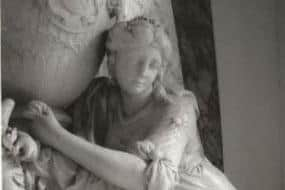
In Kingston Jamaica, an ornate tomb records his service while even in Moscow academics find him worthy of study.
So why is he so little known and celebrated in his home town?
Edited by Julia Brammer