
Support group for Rotherham women with debilitating hormonal condition
“It’s clear that people need an additional space away from family and friends to offload, be seen and heard”
A support group for Rotherham women with an under-researched hormonal mood disorder is calling for anyone who may be suffering with symptoms to join.
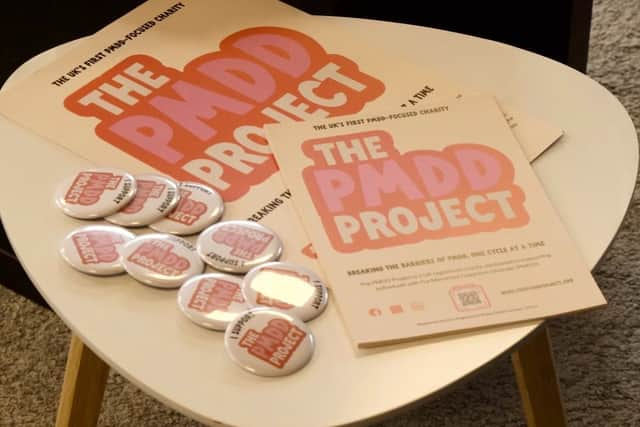
The group, currently based at the Goose Wellbeing Centre in Dinnington, forms one of many regional peer-led groups across the country which are supported by national charity, the PMDD Project.


It serves women across South Yorkshire who suffer from the debilitating condition and currently boasts 65 members in total.
Pre-Menstrual Dysphoric Disorder, or PMDD, is a mental health condition caused by an increased sensitivity to the hormonal fluctuations that occur during the menstrual cycle.
Psychological symptoms can include suicidal and homicidal ideation, intense self-hatred, anxiety and depression, as well as a host of physical and cognitive symptoms.
Despite the condition, impacting one in 20 people who menstruate, awareness of the condition is limited, and it takes an average of 12 years to get a diagnosis.
This means people are living with debilitating and distressing symptoms for years, without knowing the cause or being able to access medical support and treatment.
Emma, 31, set up the group in April to support PMDD-sufferers in South Yorkshire.
She decided to set up her own group after finding it difficult to access support for the debilitating symptoms she was experiencing every month.
Sessions involve sharing methods, like self talk, for people to potentially implement in their life to ease the difficult times. Research to deliver these sessions has also exposed Emma to new techniques, and sharing experiences of the condition has helped her, and other group members, to feel less alone.
“It’s nice to see people saying they’ve left feeling a lot lighter,” she says, “It’s clear that people need an additional space away from family and friends to offload, be seen and heard.”
“It’s such a difficult topic that if someone doesn’t understand it, you can end up feeling ashamed and judged,” she added.
Emma described what it's like to have PMDD. “One of the hardest things is suicidal ideation. There’s an overwhelming sense of I just don’t want to feel like this anymore and it’s very difficult to deal with. It’s gotten to a dangerous point with me a few times.
“It’s like a lens gets put on your life and that impacts the way you see yourself, your partner, your job.
“Then the bleed comes and symptoms lift, but it’s like a shame spiral. You feel bad, there’s fractures in relationships that you need to now mend,” she explained.
Emma feels proud to have created a safe space for women who suffer from PMDD in South Yorkshire to talk to others who understand what they’re going through.
The group is peer-led, meaning members are encouraged to learn from each other how to manage their symptoms, providing a community for what can be a very isolating condition.
One member said: “I feel so settled in myself just for being there amongst others who understand and truly get it.”
The PMDD Project also hosts monthly online meetings for anyone needing support, and assists regional groups like Emma’s with access to resources, slides and statistics.
The charity provides practical resources for people suffering from the condition, from free online guides about cycle tracking and diagnosis, to campaigning with policy-makers and academics for a greater recognition of the disorder.
Emma wants to encourage anyone suffering with symptoms to attend the group. No official diagnosis is needed to join, she says, it's just a space for anyone who can relate to the symptoms and needs additional support outside of their immediate circle.
Find out more via the PMDD Project website or contact Emma on Instagram @em_harriee
If you or a loved one is struggling with suicidal ideation, contact the Samaritans on 116 123. Alternatively, text SHOUT to 85258.