
Importance of Battle of Orgreave obvious even to a cub reporter in 1984
IN THE summer of 1984 I was hardly a ‘seasoned’ journalist; in fact I was still a junior and – by chance – on an extended college training course.
But on June 18 despite my lack of experience, it was clear to all of us on my course at Sheffield’s Richmond College that something far beyond normal had happened, almost just around the corner at Orgreave.
At the time, the name had little relevance but in the years, and decades, which followed it has grown to become a byword for injustice.
By that June, I’d had a few months of the strike, reporting directly in some cases or watching events unfold with a learning eye.
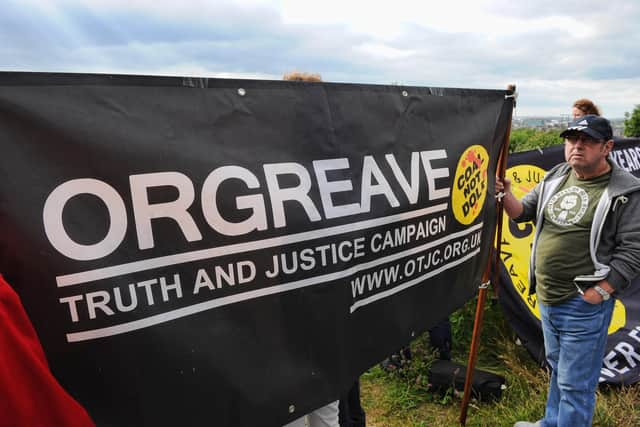

It had started as ‘another’ NUM dispute – nothing unusual for someone who’d spent the 1970s growing up in a landscape dominated by coal mines.
However, it had developed into something serious – increasingly bitter and with, it seemed, an unshakable determination from both sides to win.
Miners may have had the determination, but Thatcher’s government had the firepower in terms of the police resources they could order into action.
And order them into action, they did. Photographs from the ‘battle’ tell their own story. Many show pickets with blood streaming from their injuries, while police were equipped with helmets, shields and batons. With horses, for good measure.
The controversy was immediate and ongoing. Dozens faced the harrowing experience of being charged with offences so serious they carried a potential life sentence, only to see them dropped at court.
They claimed to have been tricked into moving to a specific field after turning up to picket the Orgreave coking plant – ‘kettled’ is the modern expression – and then set up by the police.
What sets Orgreave apart from other disputes is that the controversy has not faded, even after four decades.
It could be argued the demands for justice have developed more weight – exactly the opposite of what might be expected, from a ‘time heals’ perspective.
For the 40th anniversary of the miners’ strike, I spoke to Don Keating, a former soldier who was among those arrested at Orgreave.
A family man, who also served the community as a retained firefighter alongside his mining job, he represented the polar opposite of the ‘rioter’ image the authorities asked the public to believe.
Yet he faced the threat of prison, found himself unable to continue his firefighter role and – to rub salt into the wounds – found the National Coal Board did not want him back at the end of the dispute.
Little wonder that bitterness over Orgreave has persisted, with no-one ever held to account for events on the day and the aftermath.
I’ve been writing about it intermittently since.
Whatever happens, I’m sure that I’ll end my own career before the issue is closed.
As for Don Keating, and his wife Jackie who played a pivotal role in supporting families in Brampton Bierlow – where the 1984 strike began, with the threat to close Cortonwood colliery – after I’d interviewed them, I dropped back in to give them a bunch of flowers.
That was 42 years into my career, and the first time I’d felt compelled to do so. I can’t imagine I’ll do so again. Such is the power of Orgreave.