
Rotherham can look back with pride on place in Arthur Wharton’s legacy as one of football's greatest pioneers
He ran the Albert Tavern in Masbrough and later the Plough Inn, making him part of the local community as well as its sporting history
As Arthur Wharton’s 160th birthday is marked this week, Rotherham can look back with pride on its place in the story of one of football’s great pioneers.
But the story of the Ghana-born sportsman is about more than his achievements playing for Rotherham Town, the club that preceded today’s Millers.
It is also a reminder that the racism he encountered in Victorian England remains a challenge the modern game has yet to overcome.
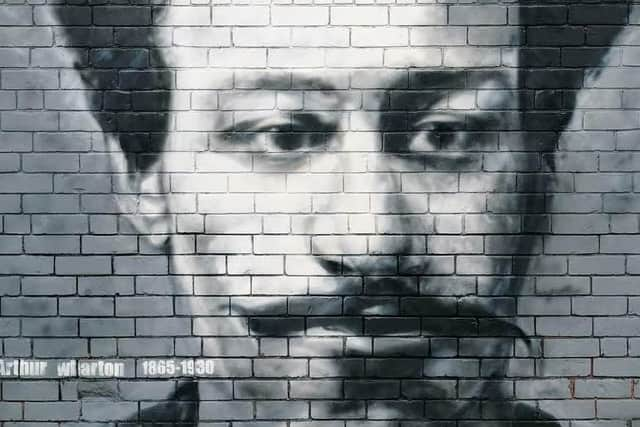

Wharton, widely recognised as the world’s first black professional footballer, signed for Rotherham Town in August 1889, aged 23.
The club’s decision to offer him professional terms was a landmark moment, opening a door in a sport where black players were an extreme rarity.
His footballing home was Clifton Lane, now the ground of Rotherham Titans.
A blue plaque unveiled there in September 2023 ensures that supporters and passers-by can connect the present-day sporting venue with Wharton’s pioneering career.
His Rotherham story is also woven into the town’s streets: he ran the Albert Tavern in Masbrough and later the Plough Inn, making him part of the local community as well as its sporting history.
On the pitch, Wharton was an exceptional goalkeeper, and sometimes a winger, a man whose speed and athleticism set him apart.
He had already made headlines in 1886 by running 100 yards in ten seconds, setting a world record.
At Rotherham Town, he helped the side win the Midland League in consecutive seasons and was part of the team invited to play Liverpool at Anfield in September 1892.
Yet his achievements came against a backdrop of prejudice.
Wharton was a black man making his way in a society where racism was commonplace, and sporting ability offered no guarantee of acceptance.
His story exposes the contradiction once at the heart of football: a game capable of celebrating extraordinary talent while allowing discrimination to flourish alongside it.
After Rotherham, Wharton played for several other clubs, including Sheffield United.
His later years were less glamorous. He worked in pubs and eventually as a colliery haulage worker, dying in 1930 aged 65 and being buried in an unmarked grave.
Recognition came much later, including his induction into the English Football Hall of Fame and the unveiling of a statue at the Football Association’s St George’s Park.
Rotherham has played its part in restoring his name, too. Alongside the Clifton Lane plaque, artwork and other tributes help keep his story alive.
These are important reminders of a local man whose significance reaches well beyond the borough.
But remembrance matters most when it informs the present.
Occasional racist abuse directed at players, discriminatory chanting and the hatred spread through social media show that football has not left Wharton’s struggle behind.
Campaigns and sanctions have a role, but lasting change also depends on what clubs, supporters and communities are prepared to challenge in everyday life.
Wharton’s anniversary is a chance to remember his remarkable achievements and Rotherham’s part in his story.
His experiences also serve as a reminder that, despite the progress made since his playing days, racism remains an issue football and wider society continues to face.