
‘We’ve been dumped on for hundreds of years’: Whitestone solar anger

“They feel they've been dumped on for hundreds of years, and they don't want to be dumped on for another 60 years,”
Communities that spent decades recovering from the scars of coal mining should not have to sacrifice their countryside to a vast solar farm, a hearing has been told.
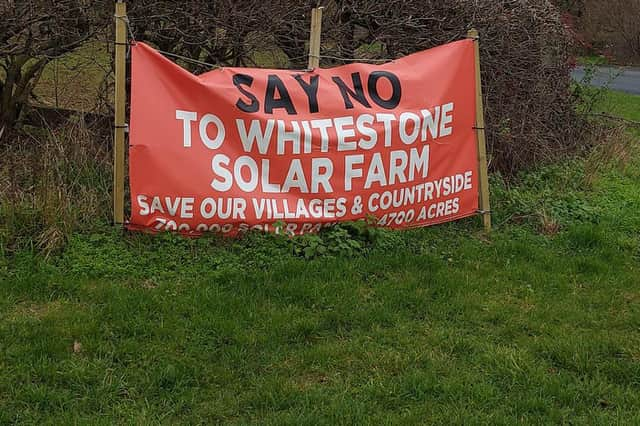

Parish councils and residents opposing the proposed Whitestone Solar Farm warned that its impact on the landscape could be difficult to hide, with panels visible from surrounding hillsides and public footpaths.
Anthony Northcote, representing Harthill with Woodall and Anston parish councils, accused the applicant of having “no understanding of the nature of the landscape in which they are trying to put this proposal”.
He said communities had spent decades repairing the area's industrial legacy and creating a new landscape.
“They feel they've been dumped on for hundreds of years, and they don't want to be dumped on for another 60 years,” he said.
Another resident told the hearing that a proposed access road would cross a peaceful spot where the ashes of his mother-in-law, sister-in-law and brother-in-law had been placed.
Rotherham councillor Greg Reynolds accused the developer of “stonewalling” residents who questioned why the scheme could not be built on brownfield land.
The Bramley and Ravenfield councillor said people felt “absolutely frustrated, let down, disappointed” and as though they had “doors slammed in their faces”.
Philip Knight, representing Conisbrough Parks Parish Council, warned that the development would change the experience of using local footpaths and bridleways.
“Walking across a footpath that's surrounded by high fencing, CCTV, and vast solar arrays is very different to the open space that we experience today,” he said.
Sam Griffiths, speaking for applicant Whitestone Net Zero Ltd, acknowledged that energy infrastructure would have visual effects but said the focus was on avoiding or minimising them.
He said particularly sensitive areas had been removed from the plans following consultation, with updated landscape information due by November 24.
Ecology was also scrutinised, with the developer's precautionary assessment identifying 119 skylark breeding territories that could be lost or displaced.
Rotherham and Doncaster councils raised concerns about the permanent loss of breeding habitat at Brampton Common Local Wildlife Site and questioned whether replacement areas and construction safeguards were sufficiently detailed.
Responding for the applicant, Matt Sleighmaker said more than 15 hectares within Brampton Common would be managed for skylarks, with additional breeding habitat potentially secured elsewhere.
The developer maintains that the scheme would benefit wildlife overall, committing to a minimum 10 per cent biodiversity net gain.
Its assessments predict a 43 per cent increase in habitat units, 44 per cent in hedgerow units and 10 per cent in watercourse units, with improvements managed and monitored for 30 years.
Whiston resident Martin Cook also raised concerns about disturbance to legally protected breeding birds, warning that inadequate safeguards could put the developer at risk of breaching wildlife legislation.
The issues were discussed on Wednesday (November 11), the second of three days of hearings at Rotherham's New York Stadium.
The proposed 750MW solar farm would span three areas between Rotherham and Doncaster and could generate enough electricity to power around 250,000 homes.
Government-appointed inspectors will examine the application before ministers make the final decision.