
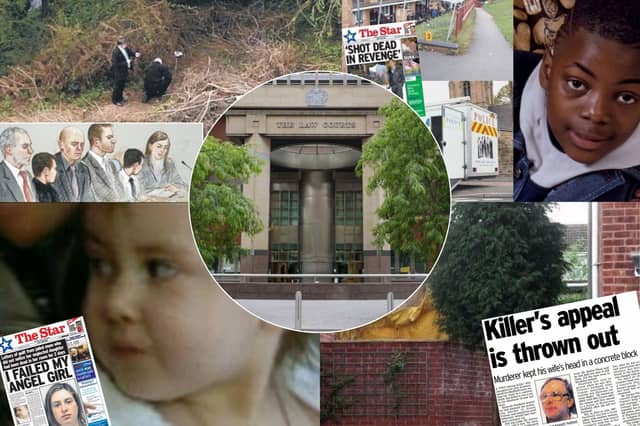

Sheffield Crown Court has bore witness to details of some of the worst, and most shocking, crimes in South Yorkshire’s history since it opened almost exactly 30 years ago.
After being officially opened by the then Lord Chief Justice of England and Wales, Lord Taylor, on May 17, 1996, thousands upon thousands of criminal court cases have been heard inside the imposing building on West Bar in Sheffield city centre.
Judges have dispensed justice in cases involving criminals convicted of some of the most serious offences on the statute book, the circumstances of which have left people across the county - and indeed the country - in utter disbelief.
Thousands of jury panels have also presided over trials heard at the court, after defendants entered not guilty pleas, triggering the centuries-old right for a case to be heard by a dozen of their peers.
A long line of Star court reporters have also been present in court, furiously noting down every cough and splutter from the press bench, in a bid to be your eyes and ears as cases are heard.
From the pre-internet days when court reporters would dictate copy to the newsroom over a landline telephone, through to providing updates in real time through social media and online blogs, to the months when people were required to stay at home during the Covid-19 pandemic, The Star has been there every step of the way throughout Sheffield Crown Court’s 30-year history.
Court reporting continues to play an important role in open justice; and the principle that “not only must justice be done, justice must be seen to be done,” which was coined more than a century ago by Lord Hewart, the then Lord Chief Justice of England.
The former Sheffield Crown Court building, which was also known as Sheffield Old Town Hall, on Waingate, opposite Castle Market, still stands disused following the move to the new law centre on West Bar. The most recent update in the Grade II listed building’s history came in November 2025, when it failed to sell at auction.
Here, we have delved into The Star’s archives to bring you this collection of the biggest, and most high-profile, cases heard at Sheffield Crown Court over the last three decades.
In this first part, we take a look at cases heard in the first 15 years that have passed since the Crown Court was opened, running from May 1996 through to May 2011.
Below are links to more detailed reports on the cases included within this article:
- Heartbreaking case of vulnerable Sheffield teen murdered by friends armed with farming scythes on camping trip
- Shoe rapist James Lloyd's chilling confession when South Yorkshire Police uncovered his crimes
- Edlington torture brothers: Why pair who tortured and nearly killed two young boys can never be named
- Burngreave crime: The killers who rapped in court after teenage boy was shot dead in city street
- David and Ashley Cohen: Sheffield brothers spend 15 years behind bars for murder they deny
- Jonathan Matondo: The unsolved murder of teenage boy gunned down in Sheffield
- How detectives solved 'body in the bag' murder after remains found in Sheffield
- Gerald Smith: 20 years since nine men were jailed for Sheffield murder after trial that made legal history
- Lester Divers: 20 years since notorious gangland killing which shocked Sheffield
- Sheffield dad dubbed "British Fritzl" made his daughters pregnant 19 times
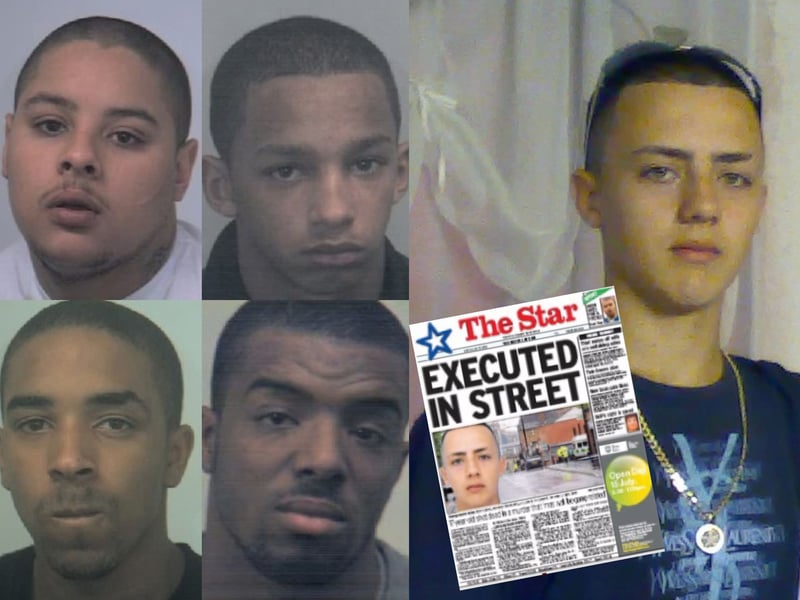
5. Tarek Chaiboub: Four jailed for life in 2009 over teen's "cold-blooded" murder
Tarek Chaiboub was just 17 years old when he was killed in broad daylight outside a barber’s on Spital Street, Burngreave, in July 2008. He was targeted as part of a feud between different factions of the S3 gang which operated in Burngreave and neighbouring Pitsmoor at that time. Tarek, known on the streets as ‘GT’ or ‘Global Threat’ was carrying a gun himself on the day he was tracked down and shot dead in what was described as a “cold-blooded” killing. The judge who sentenced those involved said: “Britain is not broken, although certain communities are being plagued by the lawless activities of the likes of you and gangs such as S3.” The group chanted a rap, shouted and laughed as they were led away from the dock to begin prison sentences totalling 110 years. During their 2009 trials, it emerged that Tarek was shot after a feud developed among rival S3 factions. The teen was said to have had a foot in both camps and had been seen as a ‘traitor’ after being blamed for passing on information which resulted in a knife attack. Nigel Junior Ramsey, his brother Denzil Ramsey, their next door neighbour Levan Menzies and pal Michael Chattoo were all involved in the plot to kill Tarek and although only one fired the fatal shot they were all convicted. They blamed Tarek, of Castledine Gardens, Wincobank, for passing on information that led to the near-fatal stabbing of another S3 gang member. Nigel Ramsey – known on the streets as ‘The General’ – and said to have been in charge of the younger members, organised the killing while behind bars using a mobile phone which had been smuggled into his cell. Ramsey, formerly of Andover Street, Burngreave, was jailed for a minimum of 35 years. His ‘lieutenant’ Chattoo formerly of Daniel Hill Street, Upperthorpe, was jailed for a minimum of 30 years; Ramsey’s brother Denzil got 25 years and ‘foot soldier’ Menzies received at least 20 years. Top left: Michael Chattoo; top middle: Levan Menzies; bottom left: Denzil Ramsey; bottom middle: Nigel Junior Ramsey, Right: Tarek Chaiboub | SYP
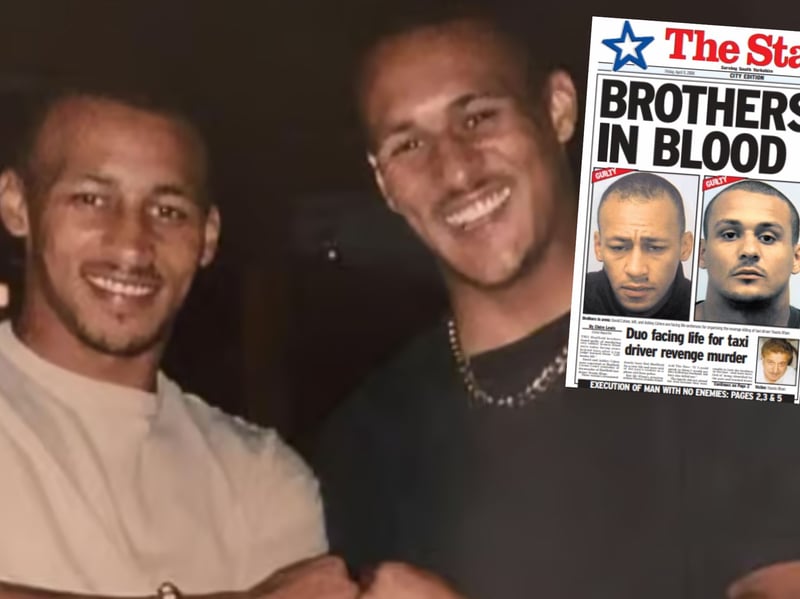
6. Taxi driver revenge murder: Brothers jailed for life in 2008
David and Ashley Cohen were convicted of the murder of city taxi driver Youis Khan in April 2008 after denying the charge and standing trial together. But they were convicted on a ‘joint enterprise’ basis in that the prosecution did not suggest either of the men pulled the trigger of the gun used to kill 53-year-old Mr Khan but alleged they were aware of the plan and therefore just as culpable as the shooter. The brothers have always denied responsibility and in April 2018 spoke to The Star from behind bars, calling for a 'fair day in court' in a bid to clear their names. Their argument is that a confession by prosecution witness Vincent Simmons that he lied during their trial should merit an appeal or re-trial. He called the Cohen family and in recorded telephone conversations admitted that it was 'beneficial' for him to give evidence against the brothers during their trial because he never went to prison for offences he was facing custody for. The recordings were examined by the Criminal Cases Review Commission but the case was not referred to the Court of Appeal. David, a dad-of-two from Upperthorpe, said in that Star interview: “I feel let down by the criminal justice system. All I want is a fair trial.” Ashley, from Oughtibridge, said: “We are innocent.” Mr Khan was shot as he was driving his cab on Scott Road, Pitsmoor, in 2007, in what South Yorkshire Police said was a revenge attack after the taxi driver's son, Imran, fired shots at David Cohen's house. David, who was 28 when he was jailed and Ashley, who was 25, were sentenced to 64 years between them – among the longest sentences ever handed out in Sheffield at that time. David was jailed for 31 years and his younger brother for 33. | SYP/Iconic Media Group
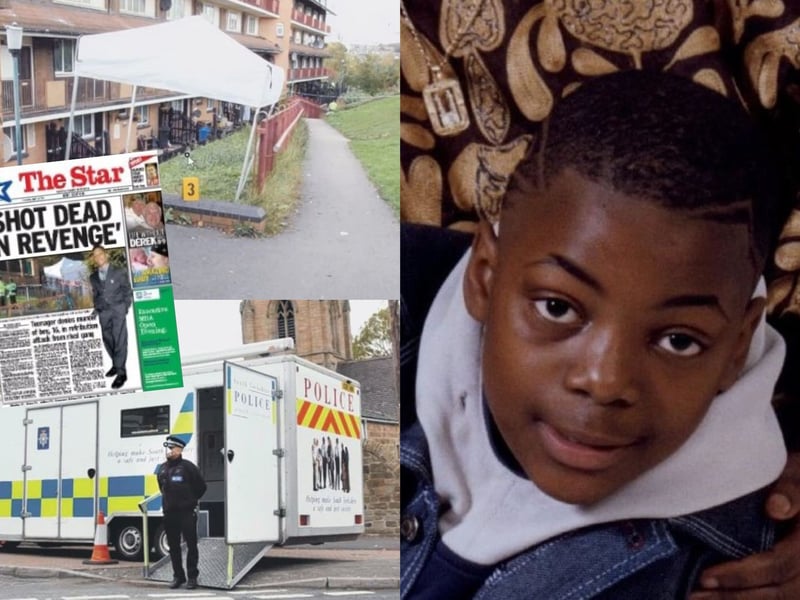
7. Jonathan Matondo: Two murder trials in 2008 but no convictions
16-year-old Jonathan Matondo came to Sheffield for a better life as a young boy to escape a civil war in the Democratic Republic of Congo. But on October 18, 2007, his family’s dreams were shattered after Jonathan paid the price for becoming embroiled with a postcode gang operating in Sheffield at that time. On the day Jonathan was killed - on the Nottingham Cliff recreation ground in Burngreave - there had been another failed attempt to shoot the teenager just hours earlier, when shots were fired at him as he visited a friend’s flat. It is believed that he was targeted that day after a house belonging to relatives of an S4 gang member was fired at the night before. A suspect was charged over Jonathan’s murder and stood trial twice. Jurors were unable to reach a verdict after the first trial and found him not guilty after a second trial in 2008. Detectives believe that Jonathan was ‘targeted and ruthlessly killed’ in an ‘organised and planned attack’. Forensic work established that the gun used to kill Jonathan had been used to fire at another S3 member's home two months earlier. In the two years before Jonathan’s murder, police compiled a dossier of 38 incidents involving the feuding S3 and S4 gangs, and a number of firearms were seized. There had been a series of stabbings, shootings and tit-for-tat attacks leading up to the killing. Jonathan’s murder is one of a number of unsolved cases on South Yorkshire Police’s books | 3rd party/Iconic Media Group
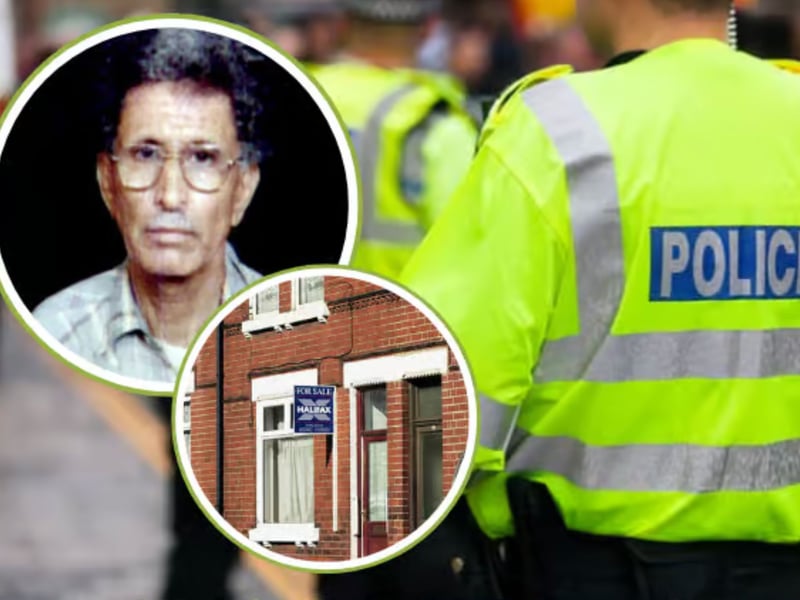
8. "Body in the bag" case: Father and son jailed for life in 2001 for murdering 75-year-old
In January 2000, two men found a sports bag dumped at the side of a road in Sheffield, opened it and made the shocking discovery of human remains - triggering one of the most difficult investigations ever conducted locally. It became known as the ‘body in the bag’ case and initially detectives had no idea who the dead man was because his remains were so badly decomposed. Sheffield University had specialists in facial reconstruction techniques and they were called in to create an image of how the mystery man would have looked when he was alive. Still with no idea of the dead man's background, police turned to both The Star, for South Yorkshire coverage, and the BBC Crimewatch programme for national publicity. Amazingly, the answer to their question came from within the police service itself. A mechanic working at a South Yorkshire Police garage thought he recognised the man and checks revealed his suspicions were correct. The man was identified as retired cutler and steel worker Mohammed Nasser Ali, who was 75 when he died. Mr Ali's son, Hassan Mohammed Nasser, in his early 40s at the time, told them his father was alive and living in Saudi Arabia. But detectives were suspicious. They arrested him and Mr Nasser’s son, Kassan Hassan Mohammed, who was in his late teens and confessed and explained what had happened. Mr Ali’s son Hassan Mohammed Nasser, of Catherine Street, Burngreave, and Mr Ali’s grandson Kassan Hassan Mohammed, of St Philips Lane, Netherthorpe, were both found guilty of his murder after a trial at Sheffield Crown Court. They were jailed for life. Jurors heard that after he was killed, the pair had continued to claim benefits to the tune of £9,500 which Mr Ali had been entitled to. They told people he had returned to the Yemen. | 3rd party