
New season, new laws ... keeper crackdown tops the agenda in the 2026/27 campaign
Referees have been told to apply the laws vigorously
A number of rule changes affecting League Two Rotherham United and other EFL clubs will be in place when the new season kicks off this weekend.
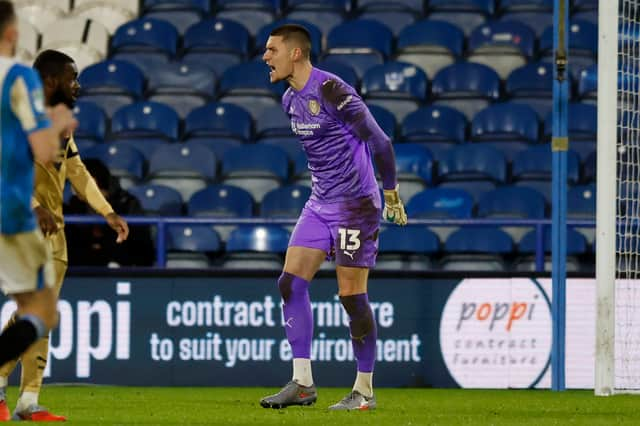

Chief among them will be a clampdown on goalkeepers who feign injury for tactical reasons and a push to speed up substitutions.
The new laws apply to in the fourth tier, League One and Championship, and here's a summary of them and some existing ones.
Goalkeeper injury trial
It is designed to address occasions where non-contact goalkeeper injuries can disrupt momentum, slow the game down or create opportunities for tactical instruction.
If the game is stopped ora re-start delayed for a goalkeeper injury, the manager/head coach will be required to nominate an outfield player to leave the pitch immediately. The nominated player is required to remain off the field for a minimum of one minute after the restart of play.
The trial will operate with a number of exceptions, including where a free-kick is awarded for a foul on the goalkeeper and they immediately require treatment, the goalkeeper and an outfield player have collided and need attention or the goalkeeper is bleeding. The aim is to ensure genuine injuries continue to receive appropriate medical attention while removing any potential unfair sporting advantage associated with stoppages.
Substitutions
To minimise delays and ensure the game resumes quickly, players being substituted will be expected to leave the field within 10 seconds of the substitution signal being given.
Where a player exceeds the 10-second limit, the substitution cannot be cancelled and the substitute cannot be changed. However, the substitute will only be permitted to enter at the first stoppage after one minute has elapsed.
Maintaining the pace and flow of the game
Match officials will focus on maintaining the pace, flow and integrity of matches by reducing unnecessary delays and minimising disruption tactics. Officials will be supported in applying consistent approaches to restarts, substitutions and injury management while ensuring additional time is calculated accurately and fairly.
Goal-kicks and throw-ins
A five-second countdown will be available as a time-management tool where players unnecessarily delay the taking of a throw-in or goal-kick. Referees will determine when the countdown begins. Circumstances when the countdown can begin include situations where a player causes delay by:
- Slowly retrieving the ball
- Taking up an incorrect position at a throw-in
- Placing the ball in an incorrect position at a goal-kick
For throw-ins, if an unfair delay continues after the countdown, possession will be awarded to the opposing team. For goal-kicks, the consequence will be a corner awarded to the opposition.
Goalkeeper eight-second rule
The goalkeeper eight-second rule will continue to apply. Once a goalkeeper has control of the ball, the referee will determine when the count begins. If the goalkeeper exceeds the permitted time, a corner will be awarded to the opposition.
Accurate calculation of additional time
Match officials will continue to apply a more accurate approach to additional time calculations, ensuring that major stoppages are reflected appropriately. This includes:
- Goal: Added time clock starts after 30 seconds
- Substitution: Exact time from play stopped to restart
- Injury: Exact time from play stopped to restart
- Penalty kick: Exact time from award to restart
- Delaying restart/time-wasting: Referee allowance based on match events
- Red card: Exact time from card shown to restart
Injury process
Officials will continue to balance player welfare with maintaining the flow of the game. Where play is already stopped and a player requests treatment, they will be assessed before leaving the field and remaining on the touchline for a minimum period of one minute following the restart of play.
In circumstances where the referee stops the game for a suspected injury, medical staff will be immediately called on to the field to assess the player, after which the player must leave the field of play for a minimum of one minute following the re-start. Even if the medical staff refuse/decline to enter the field, the player must still leave.
Challenges on goalkeepers
Officials will continue to apply a high threshold to contact involving goalkeepers. All players have a right to their position on the field and being in the way of an opponent is not the same as moving into the way of an opponent. As a result, normal football contact and genuine challenges for the ball will continue to be permitted.
Referees will intervene when there is:
- A clear action to interfere with a goalkeeper's arms
- A clear action to impede the goalkeeper with no intention of challenging for the ball
- Contact that directly impacts the goalkeeper's ability to play or challenge for the ball
Hair-pulling
A clear and deliberate action involving excessive force and/or brutality will result in a red card for violent conduct
A clear action without excessive force will result in a yellow card for unsporting behaviour
Negligible, accidental or inadvertent contact with an opponent's hair is not usually an offence
Simulation
Referees will continue to take action where there is a clear attempt to deceive a match official.
A caution for unsporting behaviour is expected where a player attempts to deceive the referee by simulating a foul challenge or feigning injury.
Indicators of simulation include:
- Clearly no contact by the opponent
- A player clearly instigating contact
- Obvious exaggeration of minimal contact
- Clearly feigning injury
Clearly embellishing contact in an attempt to earn an opponent a yellow or red card
Handball
Officials will continue with a "less is more" approach. Not every touch of a player's hand or arm with the ball constitutes an offence. Referees will assess arm position in relation to body movement and the overall context of the actions. Players are not expected to move with their arms by their side or behind their back when it is not a normal expectation to play in that way.
Factors indicating a handball offence may include:
- Deliberate movement of the arm towards the ball
- Clear additional arm movement towards the ball after normal contact between arm and ball
- An arm position that makes the body unnaturally bigger in an unjustifiable way
Mitigating factors include:
- Justifiable position or action
- Supporting arm when a player falls to the ground
- Ball played onto a player's own arm
- Deflection from the same player when the ball takes a clear trajectory change before hitting the arm
- Ball played by a teammate
- Proximity to the ball when struck
Holding
Officials will look to identify offences where there is clear holding which either has a material impact on an opponent's ability to play or challenge for the ball or involves an obvious non-footballing action.
Particular consideration will be given to:
- Use of both arms to hold
- Clear sustained shirt pulling
- Players focusing solely on their opponent rather than the ball
- Actions that clearly prevent an opponent from competing fairly
Player behaviour
In incidents involving discrimination, where discrimination is witnessed by the referee, a red card will be issued. Where an allegation is made, the appropriate reporting protocols will be followed. The optional law relating to players covering their mouth being issued a red card in confrontational situations where an allegation of discriminatory comments is made will not apply.