
Matt Hamshaw and Rotherham United ... the story of a troubled reign
‘NEVER too high, never too low.’
It was Matt Hamshaw's oft-repeated outlook during his reign as Rotherham United manager that came to a sombre end with today's announcement that he'd been sacked.
No-one should enjoy seeing a good man depart. But too many supporters wanted him gone and the voice of the crowd is always the most persuasive in the end.
That, and last night's five-goal mauling at Peterborough United which makes League One relegation almost inevitable.
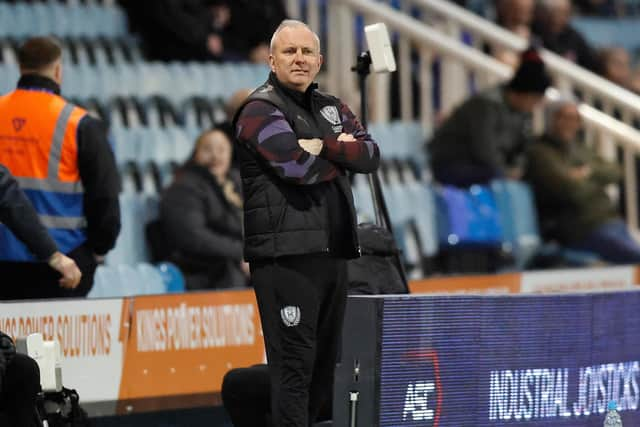

“Hopefully I'm here on Saturday,” he said in his last interview. “If I'm not here, then that's on the club. But I wish this club nothing but the best. I always will. I'll be watching in the stand as soon as I can.”
He survived less than a year, with much of his best work done behind the scenes as he set about turning around the dire situation he inherited last March following two seasons of wretched fortunes at AESSEAL New York Stadium.
The 44-year-old was doing a better job at his boyhood club than many people gave him credit for while the noose was tightening. However, it was a job that was going to have downs as well as ups, a job that was going to take time, a job that required patience from those around him.
And above him.
He will acknowledge himself that the sheer number of League One defeats - 15 in his final 21 matches in charge - and 22nd place made his position precarious.
But he was hamstrung by previous events at the club, denied - against a backdrop of savage cutbacks - the kind of spending power afforded to his predecessor and unable to tackle his mission to reset the club in the manner he had in mind when he was appointed.
Hamshaw has paid the price for the failings of others as much as for any of his own.
Dissent had been growing, amplified to an unbearable degree by the roar of the social-media mob but also, it has to be said, expressed by an increasing portion of the more sober majority who make their pilgrimage to S60.
The budget this season is around the £5.5-million mark, which makes it the 15th-highest in the third tier. More than two thirds of it, though is, is taken up by the wages of players Hamshaw didn't bring to the club.
Of the old guard, only Sam Nombe and Joe Powell are men he'd have chosen himself to have signed.
The beginning of the end came at Burton Albion last month during an abject 1-0 reverse when Millers fans turned on the boss and their team. The players weren't fit to wear the shirt, the football was sh*t, the manager was getting sacked in the morning.
It was a cold, bleak night in Staffordshire. Afterwards, in a near-deserted stadium, Hamshaw, picked out by the floodlights and fighting the hum of the ground staff's mowers, cut a lonely figure on the touchline as he made his regular post-match call to the man who has now fired him, chairman Tony Stewart.
He never really recovered from that evening as the defeats and discord mounted.
Hamshaw drastically lowered the average age of the squad, following a fresh remit of bringing in young players with development and sell-on potential.
For a spell, it worked and, after teething troubles, mid-table Rotherham weren't that many points away from the play-offs. Then it didn't work and the run of losses became longer and progressively dispiriting.
It turned out there was a lack of character in the side that was, sadly, more telling than the sum of some talented individuals.
Never too high, never too low. It was easier said than done.
He remained lively, engaging company in private, with off-the-record chats sometimes stretching beyond an hour after pre-match press conferences at the Roundwood training base
But the strain was beginning to tell. He deleted the X app from his phone because the #rufc hashtag was throwing up too much abuse and felt compelled to ask his wife and two daughters to stay away from matches.
All the while, he protected the club by not going public with some of the constraints he was working under.
The players - the ones he wanted, anyway - loved him.
Dan Gore stayed in the January window when he could have gone to a major Championship side because he so liked the processes and environment at Roundwood.
Another loanee, Jamal Baptiste, also had outside interest and the fact that he, too, went nowhere was down to the 'Hammy Effect'.
Top scorer Nombe was so loyal he had no issue with remaining until the summer before being sold.
Yet there was a split in the camp as some of older players taking up most of the money found themselves losing their status and not feeling - even when they were in the side - part of the new age.
And, so, we move on to injuries. I know, a boring subject by now after months of them being written, read and argued about. Their sheer number, their depressing regularity and the continual toll they took on selection options did more, probably, than any other single issue to hasten Hamshaw's downfall.
Not in a single game this season was he able to field what he regarded as his best 11.
He soldiered on gamely, remaining the same down-to-earth bloke who'd answered the call of the club he's always supported and the one with whom he'd achieved three League One promotions as a coach.
He always answered his phone, he always replied to text messages, he was always available on WhatsApp.
His press conferences were pockmarked by idiosyncrasies in his speech. There were lots of ‘kind of’s, numerous ‘probably’s and a tendency to say about many things ‘And that’s my big frustration’.
Supporters’ big frustration? Three at the back.
Not once in those ‘pressers’, by the way, did he ever dodge a question. Unless it was me asking about interest in Duncan Watmore for the 100th time.
That he's a coach rather than a manager is an accusation that has been levelled at him, but he's tougher and more astute than some people assume. As his old boss, Paul Warne, once remarked: "He certainly doesn't mind an awkward conversation."
He ‘got’ the club, he knew that with the right ‘make do and mend’ attitude that faults could become strengths. It didn't matter that Roundwood wasn't perfect. In some ways, it helped that Roundwood wasn't perfect. Just like Warne so successfully did, he sought to foster an ‘in it together’ mentality and tap into the notion that succeeding in back-to-basics circumstances was better then just succeeding.
A justifiable criticism is that Rotherham, even taking into account their depleted numbers, didn't always look as sharp tactically as you'd expect from the side of a man with UEFA's most prestigious coaching badges.
He gave us all-time great away days at Barnsley and Exeter City. Against that, we endured Blackpool and Cardiff City at New York. And, obviously, Peterborough in that final game.
Phil Smith, the new man on the board, was a big ally. It wasn't enough to save him.
What next? Who next? Who knows?
Many of Rotherham's troubles don't lie at managerial level.
Soon after his arrival, the boss was tasked with drawing up a three-year plan. Then it lay in his drawer because nobody subsequently asked to see it.
There has been genuine progress in the football set-up, too much of which has remained unseen. A new man will walk into a better situation than he did.
Hamshaw may never be seen in management again. But he will continue to be a coach of huge standing and won't be short of offers of employment once he's taken a holiday to ease a bruised mind and aching heart.
Today is a sad day. Maybe, in the end, it had to happen, but it's tough to see a good man suffer.
A diminished budget, injuries, the wrath of the crowd, they all did for him in the end.
As did that league position ... never too high, always too low.