
This is what it was like to take to streets for change with the women of Rotherham
“It’s about having greater freedom to walk and exist”
I read on my weather app that it was forecast to snow the night of Rotherham’s women’s safety march, Reclaim the Night. But I don’t even think a blizzard could have deterred their plans.
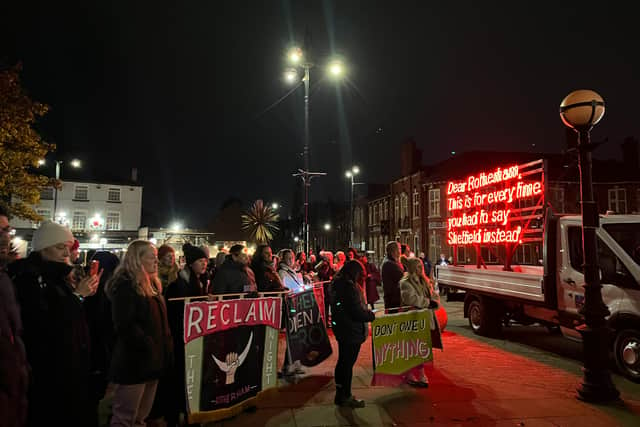
I’m standing in the middle of Snail Yard watching pockets of women in twos and threes slowly grow into a large crowd of leopard print coats, warm wooly hats and black patent boots.
One woman was perched on a wall alone, wearing the coolest poncho I’ve ever seen, “I remember going on a march like this in Oxford when I was at Newcastle uni, we all got a bus down, that was in the early 1990s or late 80s and we’re still having to have these marches,” she told me.
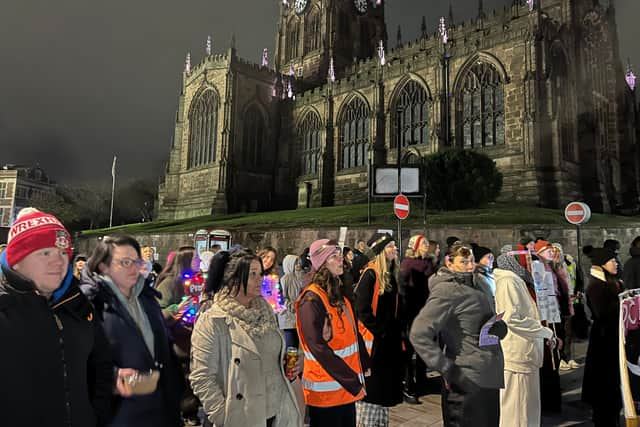

Lisa Andrews, aged 58, was at the march because she believes things still need to change. When I sat down next to her, she smiled at me like I was an old friend.
That’s one thing I noticed about the atmosphere, the knowing glances between women, the secret language that exists between people when there’s a shared experience.
Lisa’s daughter will often run home, “I’m always very conscious of her, I say to her now that it’s getting dark not to do that, and I shouldn't have to.”
As I waited for the march to start, another woman in bright neon trainers told me she thinks the streets don’t feel safe because there’s less streetlights in the area.
Rebecca Glover works for RAW People, an organisation focused on support for mental health, and said that a lot of women who come to the groups don’t want to get in their car because the streetlights have been cut.
The 48-year-old said “Rotherham has a negative reputation, I know that. I'm from Barnsley, they don’t do anything like this, but I've always felt safe in Barnsley, and I think (because of this march) that’s why I now feel safe here.”
This is now the 12th year in a row that the town has held a Reclaim the Night march, and with the way these women greeted each other, you could tell there was a routineness about the evening, and a comfort in the familiarity.
With music filtering in, and an interactive game to keep the early birds occupied, I bought a coffee to keep the cold at bay, and watched Flux volunteers in hi-vis buzzing about helping.
Flux Rotherham is the organisation that were putting on the event with Rotherham Council and other local businesses.
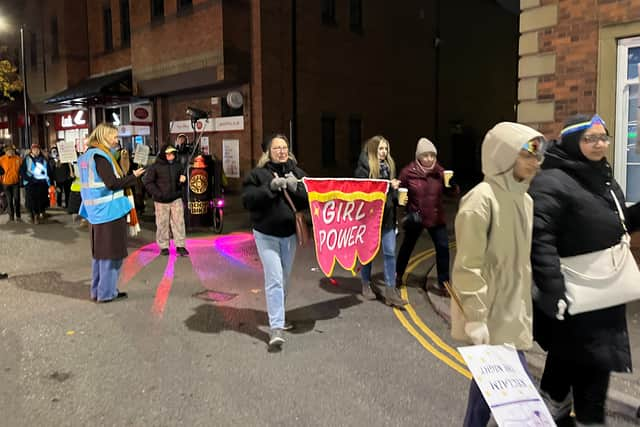
Led by a group of dancers with lit up speakers like fireflies, myself and an army of well over 100 people set out to weave our way through the centre of Rotherham.
It was calm and peaceful, but there was certainly a sense of collective unity in the fight to feel safe. These were the buildings and streets many of these women had grown up with, and they knew them like the back of their hand.
The soundtrack to the walk was made by poet Vic Leeson and electronic music producer Sophie Russell (Cherry Seraph).
Don’t dim the lights, shine them bright
Hear us roar, here us rise
We are strong, we are wise, help us women walk safely at night
We deserve to feel safe at night
Sophie told me that these words came from real women all over Rotherham, who had attended her workshops.
“When I was making it, I was thinking about how the voice is so important, that’s the key, change is created through the voice. I wanted this to be at the centre of the piece,” the 27-year-old said.
She commented on how the voices, and sounds of the space they were in, made this music entirely unique to Rotherham.
Speaking about how she felt when she was asked to create the soundtrack, Sophie said: “It was a no brainer for me because it was so important for my own personal values.
“I feel a personal connection to the objective of reclaiming the night, myself and other women often feel unsafe at night in public spaces. It’s about having greater freedom to walk and exist.”
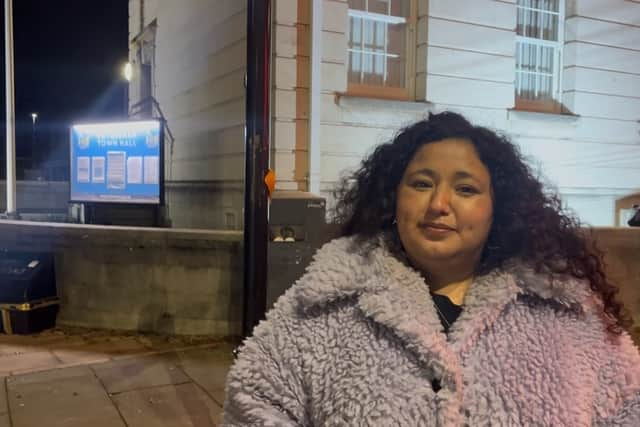
“I feel really warm even though it's freezing outside tonight,” 33-year-old Noor Salih told me with a beam once we’d reached the Town Hall.
Noor is a community producer, and freelanced for this year's march. Having been a part of the event before, you could tell her heart was in the spirit, and in Rotherham.
“One woman dies every three days in the UK at the hand of a man, those are the facts. I am marching with other women, girls, men, trans, and non-binary people.
“It really shows a lot of hope around gender equality and the conversations around violence against women and girls.”
At the town hall, women stood with their arms around each other and young girls danced to a choir that was playing on the steps. It felt that after the march that a level of shyness had broken down.
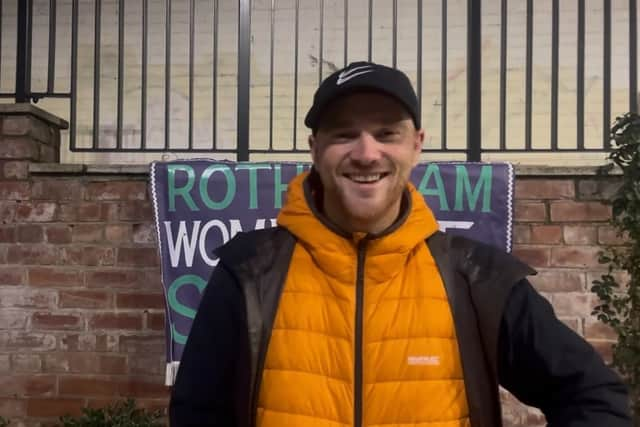
There were so many men too, dads holding their daughters' hands, friends, and sons. Artist and musician 38-year-old Rian Treanor said ‘my mum is going, and I’m here for solidarity’.
“It's important to come together and look after each other, to make sure that your neighbours are feeling safe and supported through difficult times.
“I have friends here that I know that need community to be around them.”
Noor hosted the panel of speakers after the march ended, by her side was Helen Jones, Programme Director for Flux Rotherham and Chief Executive of Rotherham Council, John Edwards. Some of the women who came up to speak declared how nervous they felt, especially when touching on personal experiences.
My walk alone in the dark after I’d left the evening felt poignant, and maybe slightly ironic in the way I still found myself glancing over my shoulder.
But there is no quick fix for these kinds of things.
Women of Rotherham and the rest of the UK still have a long way to go in reclaiming the night, but marches and solidarity show them that they aren’t alone, and that change is possible, and wanted.