
Battle of Orgreave inquiry launched as independent panel to find truth of bloodiest episode of miners' strike

After more than 40 years the truth of one of the most violent episodes of the miners’ strikes is set to be uncovered - with a public inquiry announced today.
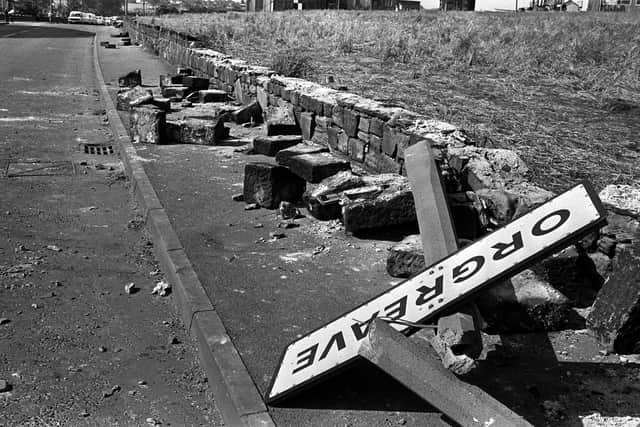
While today Waverley is being touted as one of Rotherham’s grand new success stories, the expansive new housing estate and commercial district sits atop one of South Yorkshire’s darkest chapters.
On June 18, 1984, striking miners and police clashed at the site of the Orgreave coking plant, located between Handsworth and Catcliffe.
In the years since, campaigners have said that officers used excessive force in an attempt to subdue those on strike, and later colluded to prosecute 95 miners, none of whom were ultimately convicted.

Yet official information has always been scarce, with miners and their families spending decades campaigning to get the police to reveal why they were met with so much force on that fateful day.
Now, 42 years later, an inquiry into the events has officially been launched with a report set to be produced by spring 2028.
The inquiry will act independently of the government, but provide a report to the Home Office by spring 2027.
The Bishop of Sheffield, Pete Wilcox, who will chair the Orgreave Inquiry, said: “In chairing the Orgreave Inquiry, I wish to help resolve a trauma that persists to this day — for the miners who were injured at Orgreave, who were arrested at Orgreave, who feel their story has not yet been fully told. For their families and communities, and for the relationship between police and the mining community.
“While policing has changed significantly since 1984, serious questions about the specific events at Orgreave remain unanswered. I approach this responsibility with impartiality, humility, and a firm commitment to transparency.
“Many who were present at Orgreave have waited most of their lives for a process that listens to them, respects their testimony, and examines the facts without fear or favour. I will follow the evidence without prejudice, wherever it may lead, wholly independent of government, law enforcement, or any other public body.”
Over the next two years, the inquiry is expected to examine the planning by both police and the government for the demonstration at Orgreave, the events on the day itself, the immediate aftermath, and their lasting impact on individuals, communities and the public narrative.
The inquiry will also look into charges raised against strikers who were arrested on the day.
From today (March 26), the panel will be gathering evidence, with people free to submit evidence until May 22 this year.
Bishop Wilcox added: “I am acutely aware of the weight of expectation placed on this inquiry. Many people have campaigned for decades for an Orgreave Inquiry. I am grateful for the engagement and co‑operation that has already taken place to reach this point.
“Although preparatory work has been underway for some months, today marks the formal start of my investigation. We want to hear from as many people as possible about what happened at Orgreave and the impact it has had since. That is why today I launch the Inquiry’s Call for Evidence, to enable those impacted to tell us their story.”
Information on how to take part in the inquiry can be found here.
Rotherham MP Sarah Champion celebrated the news, adding: “I'm delighted work will soon begin on the Orgreave Inquiry. This fulfils a key promise made to my constituents and will hopefully be the fulfilment of the long struggle for justice of former mineworkers and the Orgreave Truth and Justice Campaign.
“I met last year with the inquiry’s chair, the Rt. Revd. Pete Wilcox, Bishop of Sheffield, to discuss the establishment of the inquiry and was struck by his determination to get to the truth. This is something he cares deeply about. I am looking forward to work finally getting underway.
“More than four decades on from Orgreave, some have questioned the need for such an inquiry. I would invite them to speak to my constituents in Rotherham, for whom it remains an open wound.
“Those who were at Orgreave deserve acknowledgement that the smears levelled at them in the years since were just that.
“A lingering distrust continues to cast a shadow over relations between the South Yorkshire Police and the community it serves. This cannot be rebuilt until the full story is brought into the light. Above all, my constituents deserve to know the truth about their police force, and indeed the Government of the time.”
Last year, then-Home Secretary Yvette Cooper visited Rotherham to announce her intentions for an official inquiry after working with members of the Orgreave Truth and Justice Campaign.
Since then, a cabinet reshuffle has meant Ms Cooper has been reassigned as Foreign Secretary, while Shabana Mahmood has taken over Home Office duties.
The inquiry will be chaired by the Bishop of Sheffield, Pete Wilcox.
During the Home Secretary’s visit last year, The Star spoke to miners present at the violent event, including Carl Parkinson who was only 20 at the time and continues to volunteer with the National Union of Mineworkers (NUM).
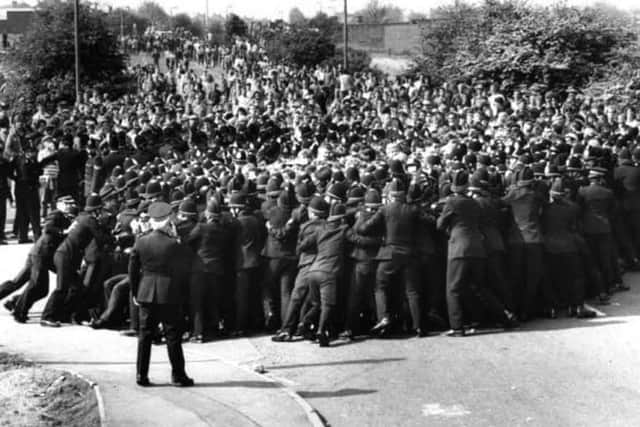
“I’ve seen a part of society I never want to see again,” reflected Carl.
“You saw truncheons coming over the top hitting [strikers in the] front row and you’re thinking ‘this is getting a bit serious now and we’ve done nothing wrong’.
“Then the shields parted - horses came and we ended up getting split up.
“In my own opinion, how someone didn’t get killed that day from the mining community I just don’t know. Some of the injuries were all [on the] head, skull injuries.
“You’re trying to help somebody who’s got their head smashed in and you’re thinking is it going to be me next, and I’m only trying to give first aid.”
On the day, an estimated 6,000 police officers from a number of forces attended the site where it was known that mass picketing was planned to take place.
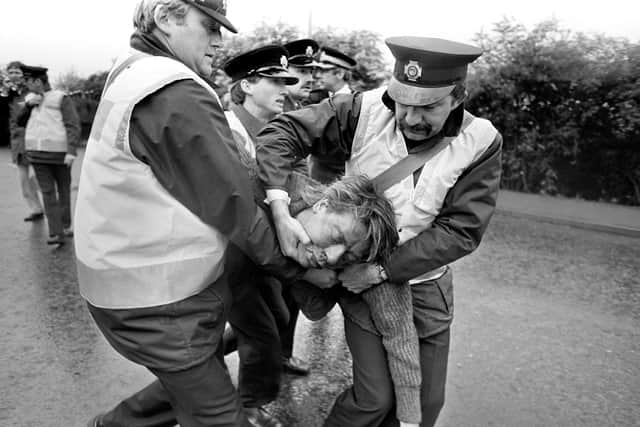
At least 123 people were injured and 95 picketers were arrested.
Of those, 40 were charged with unlawful assembly, while 55 were charged with riot - an offence that could carry a life sentence at the time.
All charges were eventually dropped, as police evidence was deemed unreliable.
And while many will celebrate this latest announcement, as they prepare to finally understand the circumstances of those traumatic events, not everyone is alive to see the truth aired.
After 40 long years, many miners affected have tragically passed away, while relevant information has reportedly been lost.
Northumbria Police has confirmed it binned two boxes containing records in April 2024 relating to the year-long strike that rocked the nation more than 40 years ago.
It prompted Lord Hanson of Flint to say that no papers should be destroyed, adding in Parliament in November, 2025: "I do not want to pre-empt any discussions or any judgments that [Bishop Wilcox] may make but, self-evidently, from my perspective, if papers are available then they should be available to the inquiry and should not be going missing or being destroyed."