
Political Earl who made a stand in supporting the Catholics of Ireland
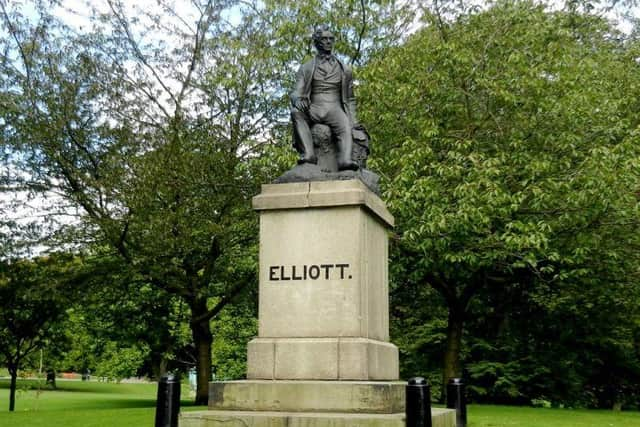
IN 1834, the Tipperary Free Press published a poem by the Rotherham born radical, Ebeneezer Elliott. His florid poetry lamented the death of William, Fourth Earl Fitzwilliam - “The steward of the trampled poor is gone, the Prince of Charity hath bowed to fate.”
What was a Rotherham radical doing writing in the Irish press in such fulsome terms?
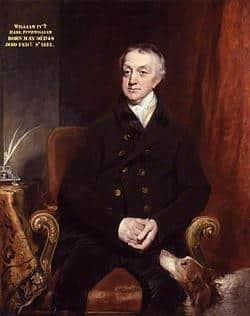

William inherited the Earldom in 1756.
His life was spent until 1815 against the background of war with France.
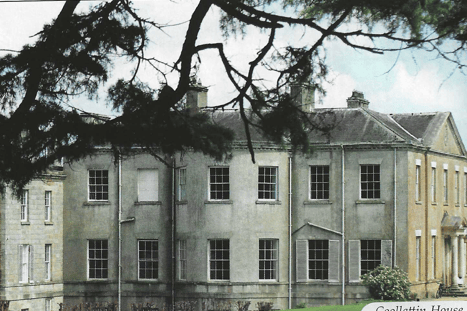
He inherited the Yorkshire estates of the family. Included in his patrimony were vast estates in County Wicklow, Ireland.
The estate at Coollattin was the fifth largest in Ireland and would soon contribute a substantial part of the family’s income.
The Fitzwilliams were part of an aristocratic social strata known as the Anglo-Irish whose lands and interests spanned the Irish Sea.
The Anglo- Irish could be born in either of the two countries and were often bound by marriage ties.
It not only included the Cavendish family of Chatsworth but Irish aristocrats.
This was apparent when Rotherham’s Enclosure Act of 1763 was published.
It showed that after Thomas Howard, Earl of Effingham, the largest landowner in the town was the Ponsonby Earl of Bessborough, whose lands were mainly in Counties Kilkenny and Kildare.
The Fitzwilliams were related to the Ponsonbys by marriage.
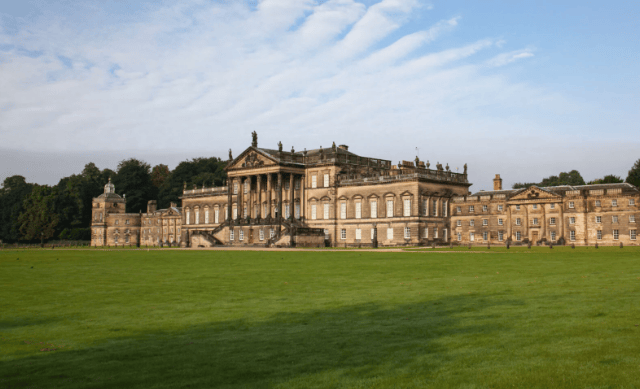
It was clearly not possible to run both his Yorkshire lands as well as his large Irish properties, so management of them was left in the hands of an agent.
The agents had considerable amount of autonomy and status.
A valuable export from the Wicklow estate was timber, evidence of which can still be seen today in the vaulted ceiling of Westminster Hall and Trinity College in Dublin.
William was the most politically active of the Fitzwilliam Earls, espousing the Whig Party’s position opposing the autocracy of the King.
This, however, did not stop him taking office in William Pitt’s Tory government.
In both England and Ireland the civil rights of Catholics had long been restricted by law.
In the 1790s Ireland, with its predominantly Catholic population, was becoming unsettled with a Dublin Parliament that excluded them from participation.
In 1794 Pitt decided to send Fitzwilliam to Ireland with the brief to calm the country down.
With land in County Wicklow and marriage into the politically influential Ponsonby family, William appeared to be an ideal choice.
After evaluating the situation, he proposed the removal of restrictions on Catholics.
For Pitt and King George III this was a step too far.
William was recalled, much to the sorrow of the Dubliners.
Papers recount that about 100,000, around half the population of the city, lined the streets of Dublin to see him depart.
A Belfast newspaper said that he was the darling of the people and their hopes for Ireland.
Pitt’s misjudgement was clear as three years later Wolfe Tone’s United Irishmen rose in rebellion and, although defeated, created a history which was to sustain the demand for Irish independence for over a hundred years.
During the rebellion the newly built Malton House at Coollattin was burned down!
The English government’s response to Wolfe Tone’s rebellion was to abolish the Irish Parliament.
An Act of Union was passed transferring the government of Ireland from Dublin to Westminster.
As the MP for Malton, he was a partisan of Charles James Fox, a radical, whose main concern was civil liberties.
After Pitt died in 1806, Fitzwilliam held the title of President of the Council in Grenville’s coalition government of “All the talents”.
In that Cabinet the Secretary for Ireland was George Ponsonby, a Fitzwilliam relative through marriage.
Though only in office for just over a year Grenville’s government scored a notable success in abolishing the slave trade.
The government’s collapse came when it put a proposal to the King for Catholic emancipation, infuriating the King.
It is almost certain that Fitzwilliam would have been an architect of the proposal.
The King’s opposition was absolute and Grenville and his cabinet resigned.
Happier news was to follow when his son, Lord Milton married Frances Laura Chaloner, daughter of Lord Dundas.
She was his cousin.
A document in the Irish Register of Deeds of 1810 referencing agreement leases on the Wicklow estate was witnessed not only by the Earl but also Thomas Dundas, Lords Milton, Bessborough and Cavendish, all connections by marriage.
He did visit the Wicklow estates in 1811 but the witness signature of Charles Bownes of Darley Hall, Worsborough, the Earl’s local land agent, suggests that it was actioned in England in advance of this visit.
In the Lords he continued his support for Catholic emancipation highlighting the problems of Ireland.
His petition was voted down by 135 to 71 votes.
Previously, in 1807, he had voted against the draconic Irish Insurrection Bill.
That year was significant in that the new Coollattin House was completed.
With later additions it became the largest country house in Ireland.
The agent who had overseen this was William Wainwright.
William Wainwright served Fitzwilliam for thirty-three years.
His responsibilities were wide.
He mediated disputes and oversaw building projects.
Not only was he a magistrate Wainwright also commanded local military forces.
He died in 1817.
A monument to him was erected by Fitzwilliam, an inscription on which spoke to the esteem the Earl held him in and the balanced role he played between the Earl and the tenants.
The new agent, William Haigh, soon experienced the difficulties of an agrarian life when an exceptional period of wet weather affected the area around Shillelagh.
Hauge employed people on public works and ordered that timber should be cut and dispersed to poorer people.
Once the Earl was made aware of the suffering, he sent a vessel with 50 tons of American flour to be distributed to the poor.
The agent was more aware of local needs and, with Fitzwilliam’s permission, diverted the shipment to Dublin where the flour was sold and the money used to provide rice and oatmeal instead.
Economic conditions in 1821 were such that Fitzwilliam allowed a cut of 15 per cent in the rents and the following year donated £5,000 for relief.
Throughout his life Fitzwilliam insisted on equal treatment for Catholics even though his principal tenants were all Protestant.
Tenants were offered long leases to give them a sense of security.
The principal tenants stood at the top of a pyramid of land use and would have hundreds of acres, a portion of which would be sublet.
In turn these tenants would also sublet with the system continuing until some were farming just one acre.
The Catholic farmers occupied the lower level of the pyramid and would have been the group most likely to suffer in poor weather and drought.
Generally, the agents would follow the Earl’s direction.
When it was known that some of the larger farmers were abusing their relationships with their sub-tenants they were ejected.
He would also insist that those holding land which entitled them to vote cast their ballot for his preferred candidate.
This was not unique to Ireland.
In the 1807 election in Malton many tenants who had not voted for the Whigs received notices of termination from Fitzwilliam.
By 1818 William was regarded as Father of the House.
In Wicklow, he was admired for his foresight.
In an era of ingrained religious prejudice, the Estate was hiring a teacher for Catholic children.
He also made a significant donation to provide shoes for poor children and to procure cheap clothing for students.
The estate continued to suffer from the vagaries of weather and the effects of starvation with William donating £500 for relief in 1822.
Lady Charlotte died in 1822 and in the following year he married a Ponsonby widow in Kildare, strengthening the Anglo-Irish relationship.
Unfortunately, she would die just over 12 months later.
In 1828, together with Milton, he visited Coollattin for a summer of shooting.
It would be the last time he saw Ireland.
On the Coollattin estate he contributed funds for the rebuilding of a Catholic Church.
He carried on presenting petitions for Catholic Emancipation until it was successfully passed in 1829.
Prior to that he contributed funds to a new power in Ireland, Daniel O’Connell, who was to bring about Catholic emancipation.
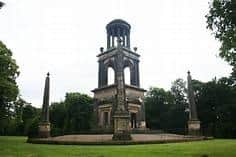
William died in 1833 and interred in the Rockingham Mausoleum.
The Irish press were very critical of absentee English landlords though they did concede the Fitzwilliams were some of the better ones.
However, could he have been criticised for being an absentee landlord at Wentworth?
It is difficult to assess how much time William spent at Wentworth.
His parliamentary career must have required long periods in London, while records often tell of him returning to the capital from Malton in the North Riding.
Milton Hall near Peterborough also saw much of him and his family.
Without doubt, the Fourth Earl was deserving of Ebeneezer Elliot’s praise.