
Plans for Swallownest housing estate revealed
A NEW housing estate is planned on a field site in Swallownest – a move which would see land earmarked for development years ago finally used.
The site, part of a large open area off Mansfield Road, was included in Rotherham Council’s Local Plan, the blueprint which identified suitable sites for use in both house-building and business development.
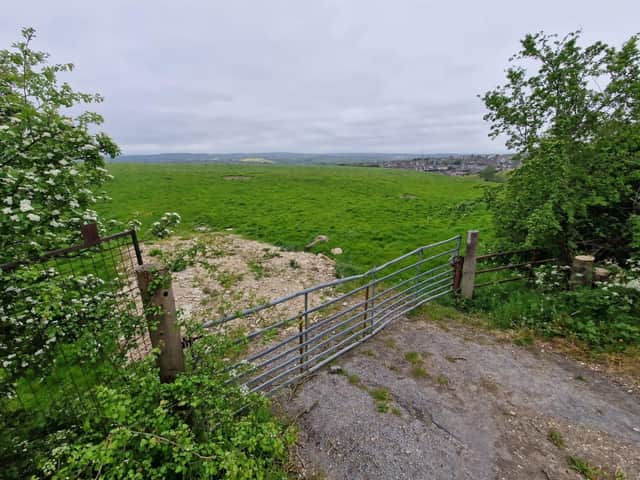

It means the council has already acknowledged the site, covering around seven hectares, is suitable to take housing.
The planning application sets out a design for the new estate, which would have one road access point from Mansfield Road, and details such as the design of houses to be constructed there.
The site is on a steep slope and at one point that means a retaining wall is proposed along Mansfield Road, with the new homes at that point constructed with their rear elevations facing that road.
Road access would be formed where the site is most level with Mansfield Road, with the access causing some concern when community consultation about the development took place, though the developers believe their proposals are adequate to answer those worries.
It is proposed to put 189 homes on the site, which would range between one and four bedroomed properties, either one or two storeys high, with public open spaces also featuring in the design.
Some of the properties would be detached, with others semi-detached or built in small terraces.
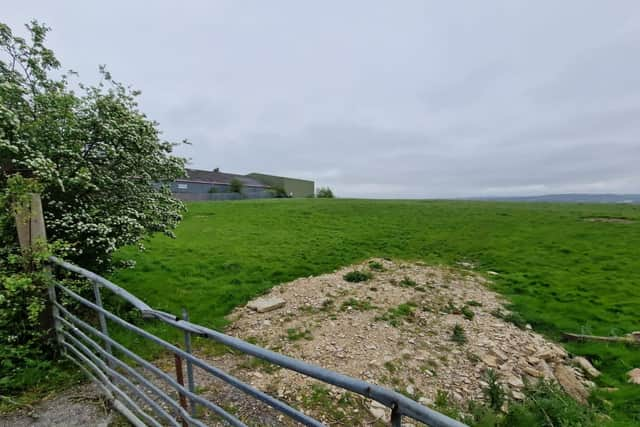
There are some business units nearby and checks have been carried out on potential noise issues, but a survey showed no problems at night time.
Timber fencing, of varying heights, is proposed to help reduce noise created when the business units are in use.
Car parking is proposed for each home, with numbers of spaces dictated by the size of each property.
Visitor car parking is proposed on a ratio of one space for every four homes.
Work has also been done to design the estate with security in mind - meaning public areas would be overlooked and the use of ‘defensive planting’ and butting rear gardens against each other in many cases, to help minimise the prospect of unwanted access.
A decision on the application will be made later.