
Fifth Earl Fitzwilliam championed Ireland to buck English trend
POLITICALLY and socially the people of Ireland have a long memory particularly when it concerns the evils done to the country by England.
On a different level people researching their family history in the villages and townlands of rural Ireland should not be surprised that the inhabitants can relate events concerning the searcher’s family, going back many generations.
When the fourth Earl Fitzwilliam died in 1833 his son, Charles William inherited a wealth of goodwill from the actions of his father actions in Ireland some 40 years earlier. To this should be added the benevolent stewardship of the family’s Wicklow estates most recently under the management family member, Robert Chaloner Senior, and later his son.
Chaloner was a more substantial figure than other agents of the time. He had been both the Mayor of York and an MP before Fitzwilliam rescued him from bankruptcy in 1826.
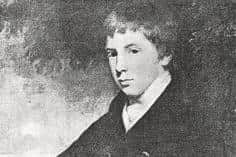

Accordingly, the new Earl and his son, Lord Milton, were welcomed in Ireland at a time when absentee landlords were being increasingly criticised.
The new Earl inherited his father`s political beliefs and was soon in action in the House of Lords. Within a few weeks he laid petitions for the abolition of the slave trade and continued to campaign for the abolition of the Corn Laws which kept the price of bread high to the detriment of the poor. He was clearly a fit man as the Sheffield Iris recorded that he made the commute from Milton House to London on horseback in ten hours.
He also argued for Parliamentary reform and was clearly a Whig supporter. However, it should be noted that the desire for parliamentary reform did not extend to Irish estates in Wicklow where, in 1836, Chaloner ensured that the two MPs for Wicklow openly stated that they would vote in the Fitzwilliams interest!
With four sons the Fitzwilliam legacy seemed assured. His elder son, William Charles had received the traditional title of Lord Milton. In 1834, the Earl passed the responsibilities for his Irish properties to his second son, William Thomas Spencer Fitzwilliam, together with a yearly revenue of £30,000. William Charles was the golden boy whose qualities were widely praised.

In contrast William Thomas Spencer, it was said, lacked the talents of his elder brother and had little interest in politics. To use Harry Windsor`s term he was the spare!
All seemed to be well. Lord Milton had married Selina Jenkinson the daughter of the Earl of Liverpool. In September 1834 a Grand Ball celebrating Milton’s coming of age was held at Wentworth. His wife soon becoming pregnant. Then in the following year tragedy struck.
Typhus arrived at Wentworth affecting both the Fitzwilliams and their servants. It was said at the time that the opening of an internal reservoir and the odours from it were the cause. The concept of bad air causing disease was still prevalent. Three of the brothers were struck down with Milton being fatally affected.
The matter of succession was put on hold subject to the birth of the child which, if it were male, would inherit the Fitzwilliam title. Selina birthed a girl leaving the second son, William Thomas Spencer, now Lord Milton, to be the heir to the Earl.

The Fitzwilliam lands in Wicklow, centred on Coollattin, were unlike many of the other estates to be found in Ireland. The majority of farmers had at least 15 acres with an infrastructure of tradesmen to support them. In Wicklow the major tenants would pay their rents to the Fitzwilliam estate and, in turn, would sublet. This process that would be repeated down the chain eventually leaving a peasant class having as little as an acre on which they would grow the subsistence crop of potato.
The Fitzwilliams were regarded as one of the better absentee landlords. This did not stop Irish politicians claiming that the Earls took £50,000 out of the country each year.
One method adopted on the estate to make the lands more productive and help the poorest was to support emigration to North America. Already in practice in 1831 it was formalised in 1835 when the Earl established the North American Colonial Association, whose stated purpose was to deal with the problem of pauperism in the country by subsidising emigration to Canada. Other officers in the company included Chaloner and his relation by marriage, Frederick Ponsonby.
The company subsidised travel and land purchases in return for which the applicant`s homes were pulled down to make the land in Ireland more efficient. It should be noted however, that this was a Company that promised its shareholders a profit when the emigrants began to farm profitably.

As the scheme progressed emigrants came from all parts of society. The late Kevin Lee, the historian of Coollattin, tells us that in 1842 six families holding 26 acres between them applied for the scheme. These were not the penurious at the bottom of the social scale that the North American Colonial Association was formed to deal with.
When the famine arrived in late 1845 the emigration was ramped up. It has been estimated that in the decade that followed the onset of the famine, around 6,000 tenants from the Fitzwilliam estates crossed the Atlantic to Canada.
By 1847 Chaloner Senior had passed away to be succeeded by his son who had grown up at Coollattin and was very familiar with the estates. Under his management more improvements were made to the estate including educational provision for both catholic and protestant children. At a time when anti catholic sentiment ran deep in both Rotherham and protestant Ireland this was an enlightened policy indeed.
The emigration strategy was picked up by other landowners. Coollattin had a number of years of experience unlike Major Denis Mahon of Strokestown House in Roscommon.
Mahon was the opposite of Fitzwilliam in that he lacked empathy with his tenants. His Strokestown estate was heavily indebted and he had ejected thousands of his tenants. He dispatched the Virginius to Canada with 476 of his former tenants of which 158 were discovered to have died when the ship arrived at the Grosse Isle quarantine station in the St Lawrence. It was one of the coffin ships.
In 1848 Mahon was assassinated. The London Illustrated News said of Mahon that he was an active benefactor of the poor while northern newspapers were a little more circumspect.

In Rotherham where only Galway sent more famine refugees than Roscommon in the early years of the great hunger the opinion of Mahon would have certainly been different.
The Rector of Rawmarsh, Willian Vesey Mahon was a relative who managed to upset locals by demanding tithes from them. Tithes were used to support the Church of England so non conformists would inevitably not wish to contribute.
For landowners like Fitzwilliam the murder of a member of the landed class must have sent a shiver down their collective spine.
At the onset of the famine Chaloner Junior sought the Earl`s permission to purchase 25 tons of Indian rice and continued to provide relief throughout the famine years. With little relief from hunger in sight emigration from Wicklow ramped up. In 1847 nearly 1,500 receiving assistance to travel to Canada. They had to agree that their homes would be pulled down. It was estimated that in the ten years which followed the famine 6,000 tenants of the Fitzwilliam lands left for Canada.
Both the Earl and Lord Milton made regular visits to Coollattin including one at the height of the famine when typhus and cholera were rife.
Frederick Ponsonby, a relative by marriage, died in 1848 leaving a debt ridden estate in Cloghan, Kings County. Fitzwilliam purchased it for £350 and worked with the agent, James Deveney, to support emigration from the estate. It would appear that by 1853 the estate was out of debt and Fitzwilliam sold it for £31,000.
Throughout his political life the Earl was a champion of Ireland lamenting English ignorance of our neighbour. He was a fervent believer in the in the rights of Catholics to practise their religion.
Charles William Wentworth, Fifth Earl Fitzwilliam, died in Rotherham at the age of 72. His illness prevented a planned visit to Wentworth by Queen Victoria. He was a supporter of catholic rights and established a non-sectarian school on his Irish estates something still lacking in Northern Ireland today.
Of the new Earl the Leeds Times said that that he has never shown himself to possess a single trait of inherited superiority. He would play a significant part in splitting the Whig party over proposals to give Ireland the right to rule itself and made the transition from the liberal Whigs to the Conservative and Unionist Party.
Edited by Julia Brammer