
Did world-famous composer's meeting with Rotherham man inspire hit film?
YOU may have seen a film at the Forge Island cinema entitled ‘The Choral’ which featured a choral society in a fictitious West Yorkshire town right in the middle of the First World War.
It was at that time that conscription had been introduced and was beginning to make a major impact on communities. The film was released last November and generally well-received by the critics.

The Yorkshire flavour of the film was ensured as it was written by Alan Bennett. Starring in the film were such well-known actors as Ralph Fiennes, Alun Armstrong and Simon Russell Beale.
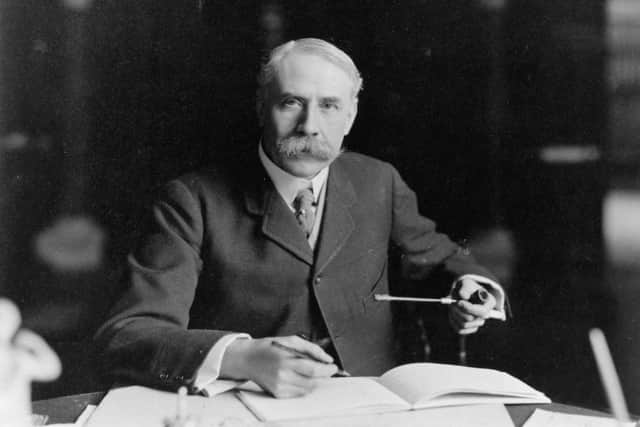
Without giving away too many secrets the climax of the film involves a visit that world-famous composer Sir Edward Elgar makes to the Yorkshire town having heard of the choral society and their preparation for a performance of ‘The Dream of Gerontius’. Elgar composed ‘Gerontius’ in 1900 and it was based on a poem written by John Henry Newman.
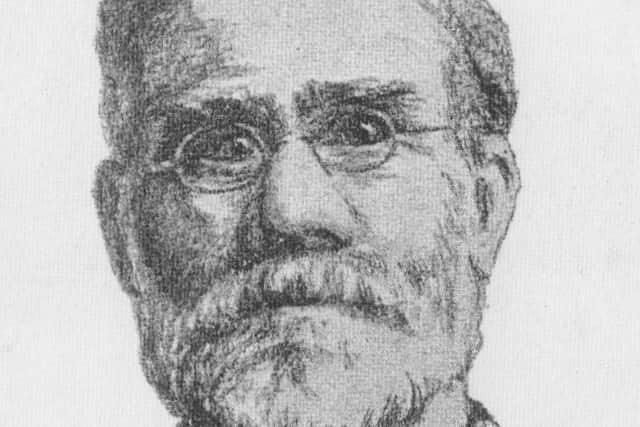
In the film much is made of the famous composer coming to talk with members of the choral society and the inspiration of its conductor played by Ralph Fiennes.
How can this work of fiction have any connection with Rotherham and its local area? The link involves Thomas Brameld, born in April 1848 in a cottage in Green Lane, Rawmarsh. One particular feature of the film can be seen to parallel in a quite remarkable way, one key part of the story of Brameld’s life.
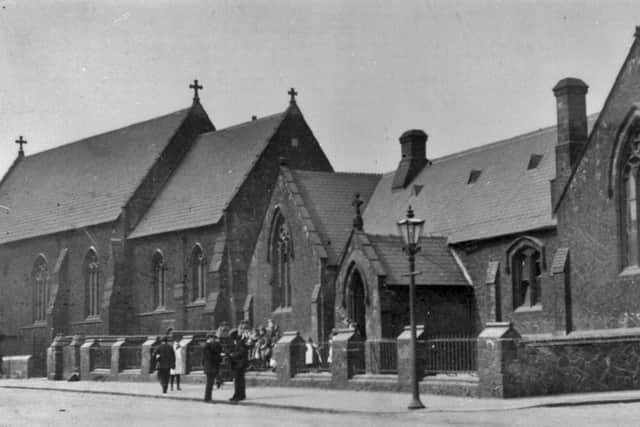
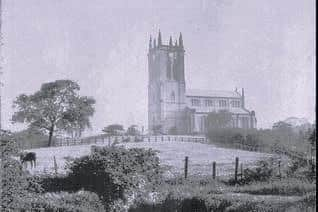
Thomas Brameld’s parents were both members of the Rawmarsh Congregational Chapel, part of which can still be seen from Stocks Lane. Largely hidden by a recently-built housing estate. The music tradition in the Brameld family was strong.
There is a written report of a conversation involving Thomas’s grandfather, Thomas Wilson, that describes a visit that Wilson made to York in pre-railway days to sing in a performance of Handel’s ‘Creation’ in the Minster.
His family had started him on his expedition, walking with him to Ackworth before he set off alone for York on foot. It obviously had a profound effect on the family because many years later Thomas Brameld made a ‘pilgrimage’ with his family to the same village of Ackworth, to see the place where his grandfather was bidden ‘God speed’ many years before.
Among Brameld’s most treasured possessions were his grandfather’s programme of the performance in York and a full score of the ‘Messiah’ which he performed a number of times.
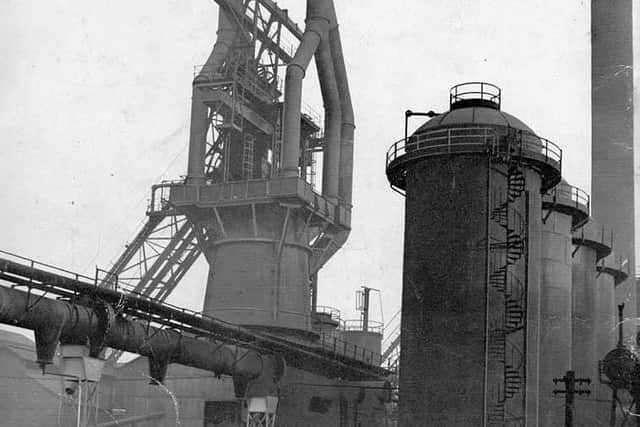
Brameld’s father was a cobbler and his workshop was behind his cottage in Green Lane. From as young as seven-years-old, Thomas helped his father with stitching on shoes. At that age Thomas went to school at the old Grammar School in Rawmarsh and at the age of ten he left to start work at Samuel Beale and Co.’s ironworks in Parkgate.
He went as a weigh-boy in the merchant mill and ten years later was involved in keeping accounts with the output of iron rails. Later in life his job included working at a furnace and at the forge rolls.
His love of music was apparent very early on and it is recorded he ‘made the old rial mill ring’ with the sound of his tin whistle. He was in the choir of the Congregational Church in Stocks Lane and while still a teenager he held his first part as an organist.
It shows how keen he was that he copied out all of Kent’s anthems from two volumes as the books themselves were too expensive to buy. He never had any teaching in music apart from a short time as a young man, when he went to Dr. Sewell, organist at the Rotherham Parish Church, for special lessons on Bach.
He got up at 4.30am every day so he could practice his music before starting his work at 6am for a ten to 12 hour day. After leaving the organ at the Congregational Chapel he became organist at Rawmarsh Parish Church and then on to Christ Church, Parkgate.
By 1888 he had been appointed choirmaster at Ecclesfield. During most of this time he played a key role in the formation of the Rawmarsh and Parkgate Sacred Harmonic Society and a number of articles in the local press track his involvement in local musical events including a great deal of conducting with children’s groups.
The Parkgate Society included two very well-connected locals as patrons, Mrs. Mary Egerton of Aldwarke Hall and her sister the Hon. Mrs Stanhope. Through their influence it was made possible for Thomas to leave his work in order to hear the ‘St. Matthew’s Passion’ in St Paul’s Cathedral in 1890 an event he regarded as one of the most important in his life.
Into the 20th Century Thomas was particularly linked with the Doncaster Musical Society and his role in music generally was considerable but apparently essential only to the local area of Rotherham and Doncaster.
An account of the Leeds Festival Dinner from c1908 survives and records the details of the night as remembered by Alfred Hague, who was one of Thomas’s early pupils who was President of the Festival then.
Hague wrote: “I was President … so I naturally asked him (Thomas) as one of my guests. I remember he sat at one of the centre tables facing the head table. Sir Edward Elgar being the principal guest was on my right, and the others filled the top table.
"After the usual speeches, Sir Edward, who had only met a few of the guests, asked me about several whose faces I suppose attracted him. One was Mr Brameld. ‘Who is that man?’ said Sir Edward.
"I replied, ‘He is from the Sheffield district, and a most remarkable man’. ‘Is his name Bramell?’ asked Sir Edward. ‘Brameld,’ I said. ‘Yes’ said he, ‘I have heard about him; do please introduce me to him’.
"I called Mr Brameld up to meet Sir Edward. The guests on the other side of Sir Edward made way and then began a most interesting talk between them. I listened, because Mr Brameld would keep dragging me in.
"One thing I will always remember when Mr Brameld was talking about the ‘Apostles’ (an oratorio for soloists, chorus and orchestra composed by Elgar in 1902) and other works he had conducted, he said in his inimitable way, ‘I’m afraid, Sir Edward, we didn’t get all the notes in’. ‘Ah’ said Sir Edward, ‘It’s the spirit that matters and I have heard that you got that, and I am grateful for it’.
“Well, his friends will readily guess what happened. With tears in his eyes he eagerly grasped Sir Edward’s hand and shook it with that well-known shake of his. So many other guests were waiting to have a word that I had to cry them off, but just before the close Sir Edward asked for him again and when ‘time gentlemen please’ was being sounded, they were tete-a-tete in a corner of the room.”
The parallels between the meeting of world-famous Edward Elgar and the apparently only locally known conductor and musician Thomas Brameld in Leeds and the meeting of Elgar with Ralph Fiennes’s conductor character in ‘The Choral’ in Yorkshire can clearly be seen.
A connection or a coincidence, an echo from the past to the present, we shall probably never know, but it is a reminder of the fascination of history.