
Schools out – in old Rawmarsh and Parkgate
THE role of education in drawing a community together is often overlooked but in places like Rawmarsh and Parkgate it played a key part in uniting a great variety of migrants from all over the British Isles in Victorian times and well into the 20th century.
When talking to older residents of the two communities it very quickly becomes apparent how fresh are the memories of many of them when ‘schooldays’ are referred to.
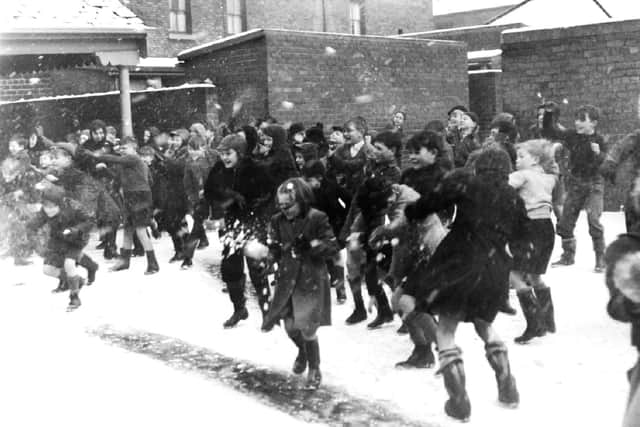

These oral accounts, recorded over the years, can take us back even into the later 19th century.
Public education has, perhaps surprisingly, been available for some children in the Rawmarsh area from as early as the 1600s when a charitable trust was set up to provide a school for the community, but only for boys.
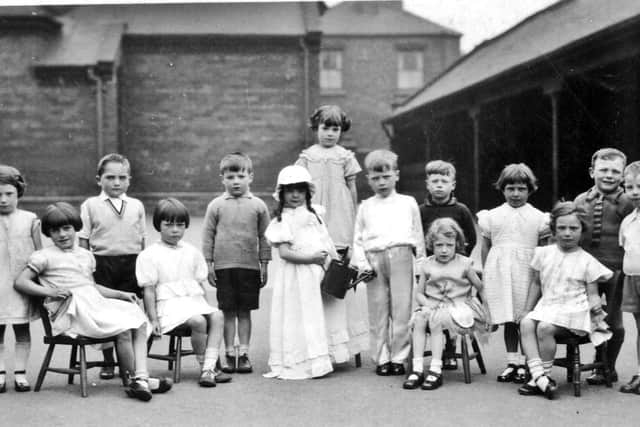
The Church of England provided elements of education for a very long time in Rawmarsh and the influential, and immensely rich, Fitzwilliam family of Wentworth Woodhouse also played a significant role.
Earl Fitzwilliam, recognising a pressing need, set up the Wentworth Parkgate National School in the 1830s.
At that time Parkgate was almost a new community with very few services and facilities.
Earl Fitzwilliam himself appointed the first headteacher, Edmund King Miller, having interviewed him personally at a college in Borough Road in London.
It is this Wentworth Parkgate School that School Lane in Parkgate is associated with.
By c1870 it had grown to such an extent that there were 267 pupils there.
Later in the school’s history its headteacher was Mr W G Bennett, and some older ‘locals’ got used to calling it ‘Bennett’s School’.
Bennett himself came to Parkgate initially in 1885 and was later a member of the Rawmarsh Urban District Council.
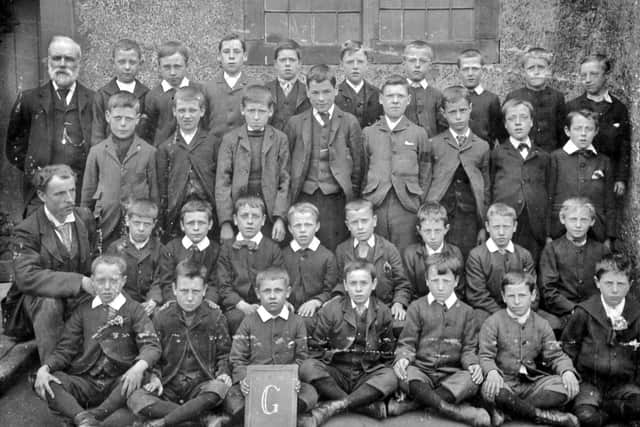
He was also an active member of the National Union of Teachers for several years.
The closure of ‘Bennett’s School’ was announced in 1938.
There were many changes to education nationally in the 1870s with the Elementary Education Act of 1870 being the first major Government legislation establishing a national education framework.
A locally elected School Board was set up in Rawmarsh but only after years of wrangling and was hugely controversial.
Local newspapers were full of stories of ‘outrages’ linked to polling for a Rawmarsh School Board.
Board proposals were rejected in 1871, 1873 and 1874 when, under a headline of ‘Ignorance and Its Antidote in Rawmarsh’, mention was made of ‘roughs’ throwing lighted crackers through a window to disrupt the poll.
Much of the dispute pitted Anglicans against Non-conformists but, as well, some illiterate parents just did not want their children to be taught to read and write.
Eventually the Rawmarsh School Board was established and in 1879 the first Board School was built in Netherfield Lane.
It was opened by Mrs Cooper with a golden key and the Boys’ headteacher was William Ping.
Among those voted on to the School Board was Crispin Todd Bray, a milk seller and Primitive Methodist preacher.
The school cost £5,500 to build and was enlarged in 1901 to take 805 pupils.
To serve the western side of Parkgate another school was built in Ashwood Road in 1886 and is still educating children there today.
The Anglican Christ Church in Aldwarke Lane also operated a school in Parkgate and then on June 4 1901 the Rotherham Road School was opened at the Low End of Parkgate to serve all those families living ‘below the level-crossing gates’ at the Park Gate steelworks.
It was closed in 1957 despite considerable local protests but the building can still be seen.
The Door Store found close to the railway bridge and Parkgate Shopping makes use of the old school building.
New schools were also required in Rawmarsh as time moved on including Ryecroft, Sandhill, St Joseph’s, Rosehill and Monkwood.
Rosehill Junior School opened on Kilnhurst Road in September 1908 with headteacher Edmund Ingham.
Ninety six pupils were initially admitted from Ryecroft Provided School.
Within two weeks the head was reporting to County Hall about “non-delivery of stock. I cannot begin brushwork”.
To provide some historical context for the school, it was the only local school damaged by German bombs in the First World War.
The school suffered in a zeppelin raid on September 25 1917 when most of the windows were blown out by a bomb.
One local resident remembered: “My mother said the following morning they had to go to school but they had to wear their overcoats as there were no windows!”
Sometimes former schoolchildren in Rawmarsh can place a memory in an exact historical context.
Albert Evans could remember attending school in Dale Road.
He said: “I was there when King Edward VIII abdicated and there was a picture of him on the wall at school.
“When he abdicated my teacher, Johnny Teal, took down the picture and tore it up.
“I can also remember that gas masks, and the cardboard boxes to keep them in, were sent to school months before the war started.”
Albert went on to Haugh Road Secondary School and remembered like several others that “we were six weeks late starting because they had to build air-raid shelters in the playground there”.
I think he saw this as a definite benefit of the Second World War starting!
Not all Rawmarsh and Parkgate children were happily settled at school.
Cliff Hawley admitted: “I didn’t like school at all…I played truant from it as much as I could.
“I can remember one time playing on the Hollow by Infirmary Road, damming up a little rivulet with grass sods and being grabbed by ‘Bobby’ Hanley round the neck. He was the school ‘bobby’ in Rawmarsh and had been a captain in the army in the First World War.”
Joan Gillions on the other hand loved school and was very excited to start at Haugh Road Secondary not many years after it opened – “We had a lovely big school field and inside toilets – sheer luxury!”
At that time the boys and girls departments were separate from each other.
Sport was always an important element of school life at Haugh Road.
Even early on Joan could remember being in both the netball team and the rounders team.
Danny Larder could vividly recall playing football for the school team there all the time from 1949 till he left in 1953.
Alick Jeffrey and Pete Vernon played with Danny at school.
Danny said: “Alick and I were inside forwards in the Rotherham Boys team and then there was Pete Vernon as well.”
Alick went on to be a true football legend from Rawmarsh – born and bred in Pottery Street.
Some of the primary schools were also renowned for their sporting achievements.
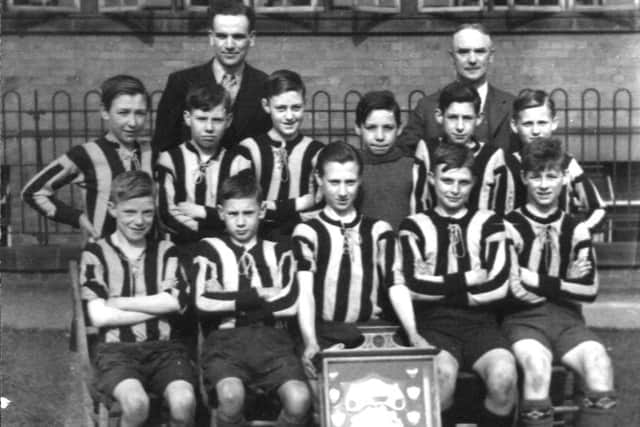
Netherfield Lane Central School were serial cup and shield winners in the 1920s and were enthusiastically supported by one of the giants of local education – Mr James Blyth.
At one time he was chairman of the Rawmarsh Urban District Council as well as headmaster of the Rawmarsh Free Grammar School for 33 years.
As part of the celebrations for the Silver Jubilee of the Rawmarsh and Parkgate Local History Group, they are mounting an exhibition at the Rawmarsh Library and Health Centre building entitled ‘Schools Out – In Old Rawmarsh and Parkgate’.
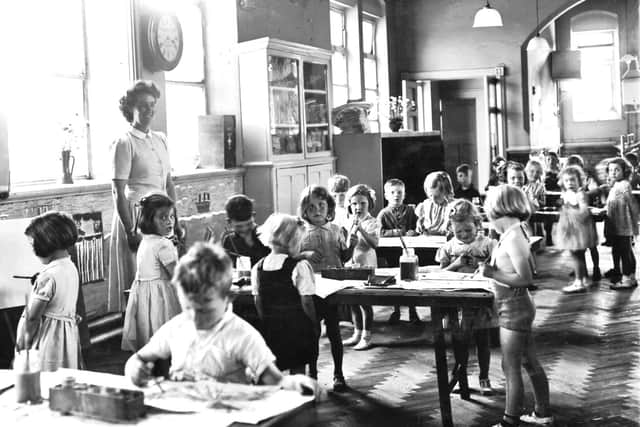
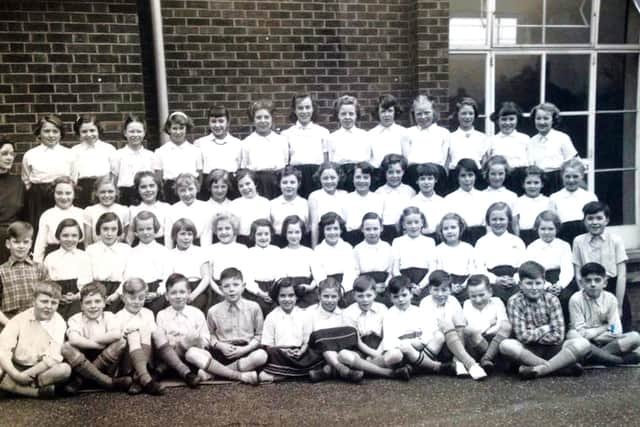
It will be made up of a large number of local school photos that the group has collected over the past 25 years.
Admission is completely free, so all are invited to come along and view the pictures of hundreds and hundreds of young faces, starting in the 1890s and going on to the 1960s.
The exhibition is on Thursday May 14 9am to 5.30pm, Friday May 15 9am to 5pm and Saturday May 16 9am to 1pm.