
Rotherham's first and 'most popular' MP proved popular with the people
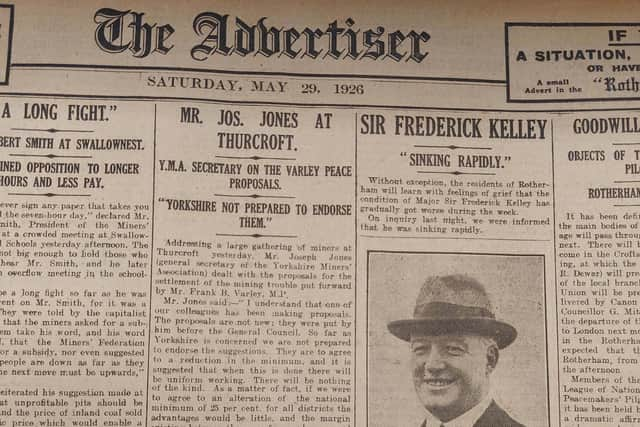
“SINKING rapidly” was the headline which greeted Rotherham Advertiser readers in the final May edition of 1926.
Sir Frederick Kelley was on his last legs after a long illness and it appeared that everyone was expecting the worst.

The Advertiser stated: “Without exception, the residents of Rotherham will learn with feelings of grief that the condition of Major Sir Frederick Kelley has gradually got worse during the week.”
But who was this man who prompted such concern?
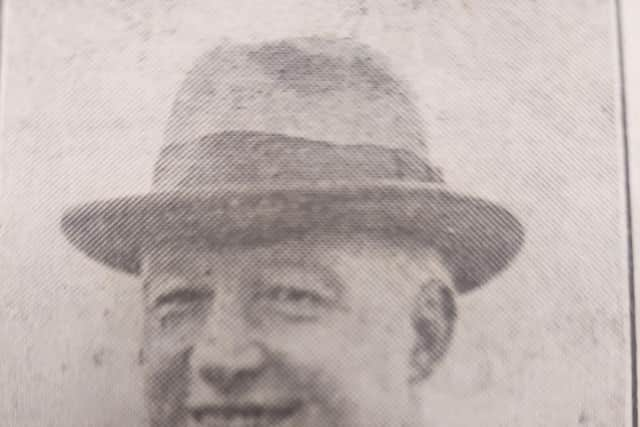
He played a significant role in the history of politics in Rotherham by being the first MP for the Rotherham Parliamentary Borough which he represented from 1918 to 1923. The Advertiser described him as “the most popular MP Rotherham has ever had”.
As feared by the Advertiser, Sir Frederick did indeed pass away at his residence – Greylands on Kent Road in Harrogate – soon after the report. He was aged 63.
He had been showing “unmistakable signs of failing health during the latter part of his Parliamentary life” but this had in more recent times got worse.
Sir Frederick had been born in Healey near Heckmondwike in May 1863 to parents Ralph and Sarah Ann and went to school at Tettenhall College in Wolverhampton and Giggleswick Grammar School.
He married Laura Pickles, the daughter of a dyer and chemical manufacturer, in 1888.
When he was just 24, he purchased the brewery business of Whitmarsh and Company in Sheffield, and then the breweries of Messrs Watson and Messrs Wilson, Sheffield, before floating them as a company with a capital of half a million pounds.
He became prominent in Sheffield long before he became well-known in neighbouring Rotherham.
He represented Ecclesall on Sheffield City Council and was chairman of several committees.
He was also a magistrate for the city and Sheffield West Riding, as well as for Harrogate where he lived for a long period.
Sir Frederick also spent 12 years in the Royal Engineers (Sheffield Territorials).
His first journey into big politics was when he contested the Hallamshire Division as a Unionist candidate in 1906 – where he failed to win.
He also contested for a seat in Spen Valley in January and December 1910.
He lost to the Liberals each time.
When the Great War broke out in 1914, the then Captain Kelley was sent to Rotherham to run the reserve forces.
The Advertiser said he became a familiar figure in the town and added “there was nothing of the snobbish aristocrat about him, and the humblest individual could approach him with the certainty of being courteously received and kindly treated”.
The paper added: “He had a warm place in his generous heart for soldiers and sailors and their dependents, and his services on their behalf were always ungrudgingly and enthusiastically performed.”
Apparently he was popular with the town’s children who would wait to salute him.
He supported many causes and made sure that the gardens and allotments of local servicemen were attended to, providing free labour and seeds. He also offered up Christmas cheer to servicemen’s children.
Towards the end of World War One, Sir Frederick was encouraged to stand as an MP and he came out “under the aegis of no political party”, being “essentially a national candidate”.
In his obituary, the Advertiser said: “He placed his country before any party, and held the view that that was no time for a return to party politics.”
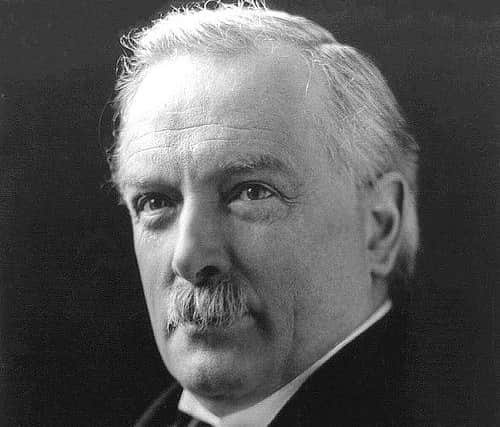
That ‘time’ referred to securing Prime Minister Lloyd George’s Coalition government and its intent of “securing complete victory over the enemy”.
In the general election Sir Frederick was faced with three opponents – Cllr James Walker, of Glasgow, for Labour; Commander Kenworthy for the Liberals; and Cllr E S Bardsley for the British Workers’ League – but he won with a 1,716 majority.
“It was a splendid victory,” opined the Advertiser, “and the successful candidate thus became the first Member for the Rotherham Parliamentary Borough as constituted by the Representation of the People Act in 1918.
The Advertiser said: “Sir Frederick was very assiduous in his Parliamentary duties, and in addition he got through a vast amount of semi-public work such as enquiring about ex-Servicemen’s pensions and badgering departmental officials to remove injustices in relation to such matters.
“The claims upon his spare time were heavy. He fulfilled numerous engagements in his constituency, opening bazaars, clubs, flower shows, and various other events.”
But in 1922 he was forced into parliamentary battle again as the Coalition government collapsed.
For Sir Frederick, the dissolution of parliament caused him some difficulty as he was away in Madeira on a cruise. But his agent, Alderman W Wormald, and his team initiated an election campaign with him running as an Independent candidate.
With Sir Frederick absent, the Labour candidate, Mr Walker, resisted the temptation to exploit the issue - described as a “sportsmanlike” move by the Advertiser.
Sir Frederick dashed home and arrived in the town a few days before polling to address meetings.
The Advertiser reported: “There was one memorable gathering at the Empire, where the rowdy element had installed themselves in considerable force. They booed, shouted, and hissed when Major Kelley appeared on the platform, and for the first time in his political career he was refused a hearing.”
But Sir Frederick still won, though with a smaller majority of 644. “It was a tribute to Major Kelley’s popularity, a fact which Mr Walker publicly acknowledged,” said the Advertiser.
One of the highlights of his second term in office was encouraging the Prince of Wales to visit Rotherham in May 1923, a fact which no doubt bore some relation to him being knighted the following month.
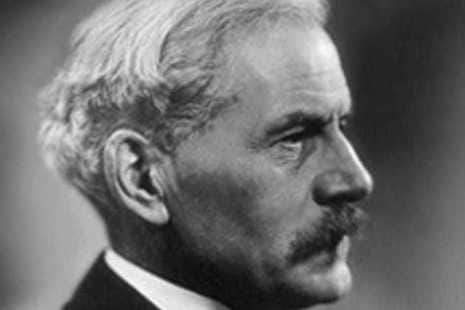
When Ramsay Macdonald’s minority government collapsed in late 1923, Sir Frederick felt he was too ill to stand again but was requested to do so. He took little part in the contest and, perhaps unsurprisingly, lost to Labour’s Fred Lindley despite the opponent being, as the Advertiser put it, “practically unknown in the constituency except in certain trade union circles”.
The tide had turned. “Sir Frederick Kelley received the cold shoulder in the most heartless fashion” losing by 2,448 votes.
The Advertiser, in its obituary, said: “From then onward Rotherham lost sight of Sir Frederick, who sank into comparative obscurity, and it is questionable whether he ever recovered from the knock-out blow which those 2,448 votes meant to him.”
It seems a sad end – though most political careers end in the same way – for an individual described as “a man of honour and a fair fighter”.
Following his death on May 29, 1926, a funeral was held at Harlow Hill Cemetery in Harrogate, officiated by Rev Canon Reed. The event was well attended, including by Rotherham folk including J H Dickinson of Advertiser owners Messrs Henry Garnett and Co.