
Remembering the days when pupils were also teachers
IN 1871 the government passed the Elementary Education Act providing education for all up to 11.
It was a mammoth undertaking as it created a demand for teachers and buildings which were not readily available.

To deal with this the government enabled towns to set up School Boards which could, if they wished, opt out of compulsory attendance.
Further pressure came in 1893 when Rotherham’s first MP and member of the Privy Council, Arthur Dyke Ackland, piloted a bill through Parliament making school attendance compulsory.
Mind you, it had little effect on John Comer of Orchard Yard who had six children and was amongst a number of residents who were fine 5/- for not sending a child to school.
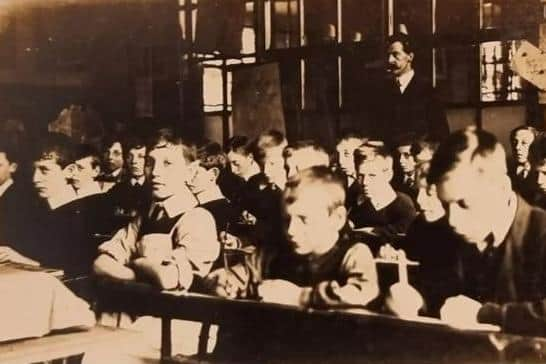
With insufficient teachers being available, the system had to fall back on the old method of using pupil teachers.
This was effectively an apprenticeship, whereby 13-year-old pupils entered into a five-year programme.
They observed experienced teachers and taught younger students while themselves completing their education.
By 1900 this was deemed inadequate.
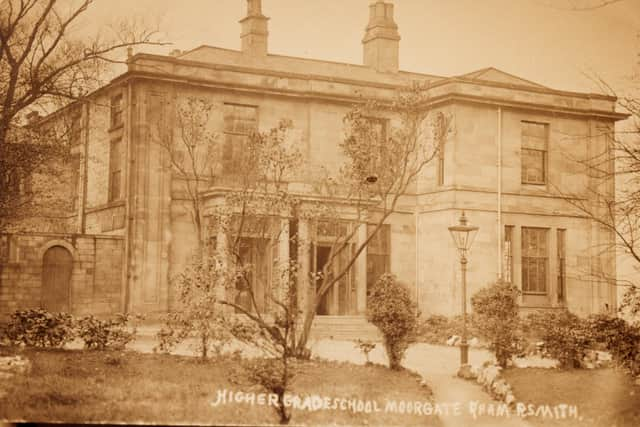
In Rotherham the council took over the South Grove building on Moorgate and created a Pupil Teacher Centre where the aspiring teachers could study for part of the week.
This allowed access to the King’s Scholarship Exam which opened up the possibility of going to University.
Ackland was thanked for his help in the purchase.
These changes not only improved the quality of teaching but also provided opportunities for social improvement, particularly for the children of the working class.
For many families having a teacher in the family was the first step in enabling social progress in the next generation and beyond.
John Elsum, a Westgate blacksmith, was a man who was ambitious for his three daughters and saw the opportunities available.
By 1881 his eldest daughter Elisabeth was a 13-year-old Pupil Teacher beginning her career in education.
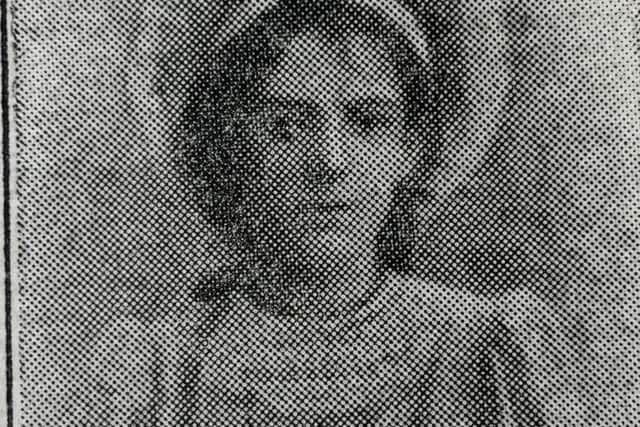
All of her sisters became teachers though Rosina had to resign on her marriage in 1902.
Sarah, his youngest daughter, married Thomas Wilkes Green, a member of an influential political family in the town and moved to Dudley where she was to die shortly after the birth of a son in 1906.
Elisabeth never married and followed a successful career in education.
By 1895 she was Head at St Anns Road where her salary was £100 per annum with a bonus of £5 for maintaining the attendance.
She would continue living in Eastwood close to St Anns School for many years.
In 1905 she had many bright students, amongst whom were Emily Pennington of Effingham Street, her sister Margaret Ethel, Margaret Abson of Wharncliffe Street, Nellie England of Bethel Road, and Minnie Jones, also of Bethel Road.
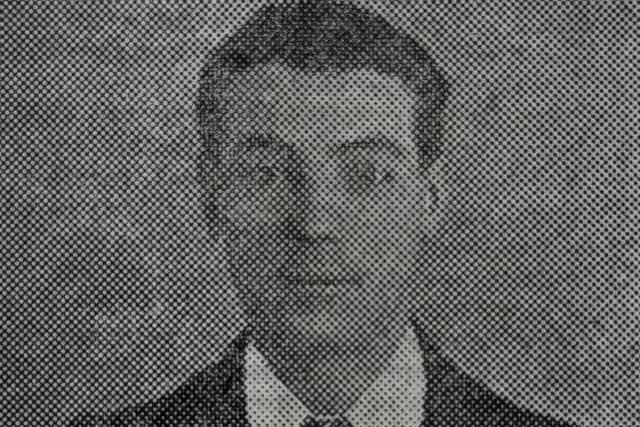
Minnie one of nine children of a Welshman.
By then Margaret Abson had taken up a Pupil Teacher post at Doncaster Road.
Margaret and Emily were head girls at the new Pupil Teacher Centre at South Grove.
They formed a group of friends who one Friday morning, January 20, met and agreed that at the end of the day they would go to Clifton Park to watch the skating.
Unfortunately, it was in the days when the park closed at seven o’clock in the evening.
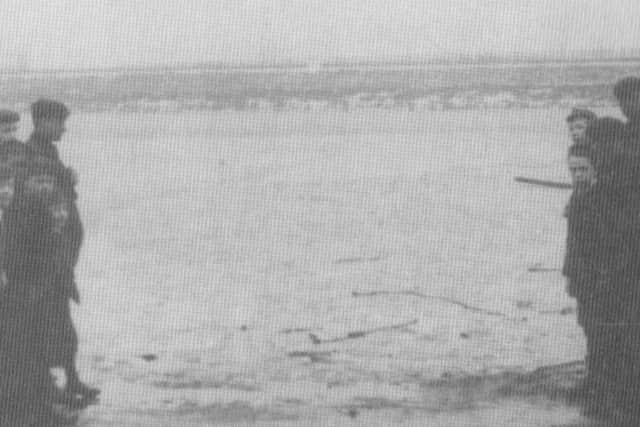
Rather than end their night they strolled down to Parkgate to watch people skate on Bratley Pond close to the Little Bridge Pub.
There were a considerable number of people present, skaters, sliders and spectators.
Minnie Jones saw a friend and moved over to speak to them.
The other girls had met Lewis Powell who they knew as he was employed in the same Parkgate office as Margaret Abson’s brother George.
Without skates they decided to slide on the ice.
Nellie England became aware that Powell, who was the only one with skates, was coming up quickly on the slide behind her and stepped off it to get out of the way and in doing so probably saved her life.
Suddenly at about a quarter to eight, the ice opened up dropping around seven young people through the ice.
Frantic efforts were made by those immersed to escape, some of whom managed to scramble out of the pond.
Clement Hague (23), of Cambridge Street went to help but fell into the water and himself needed to be rescued.
William B Clarkson was fortunate as was 17-year-old Samuel Angell of Rotherham Road.
The girls were less fortunate and, together with Fred Powell, failed to surface.
The details of the tragedy played out at the inquest held at Rawmarsh Police Station by coroner Kenyon Parker.
It identified the scene of the tragedy as a very popular site for skating, where in some places the water was up to 30 feet deep.
Daniel Cooke, a miner at Warren House Pit, having just come off shift, had gone down to the pond with a chair which he hoped would earn him a few pence by allowing skaters to use it.
He heard the screams and ran to the ice but it broke under him and he fell in but was able to push Samuel Angell to safety.
Meanwhile, William Angell, cousin of the above, demanded handkerchiefs to create a rope and managed to rescue Clarkson.
He must have been of some stature as he was forced to “persuade” reluctant owners to part with their belongings.
Cooke had form. Three years earlier he had rescued six-year-old James Thrall from drowning.
The grateful parents had a medal struck in thanks.
James was to die on the Western Front in 1915.
Survivors were taken to the Little Bridge Inn where the landlord, Mr Oxley, provided dry clothes and organised cabs to take them home.
The police, assisted by William Angell and Matthew McGowan of Chapel Street, recovered the bodies later that night.
The inquest was scheduled for the following day with the coroner putting the jury in a wagonette which was sent round to the homes of the deceased so that the bodies could quickly be formally identified.
At the inquest, both Cooke, who had learned to swim at the Rotherham Corporation Baths, and William Angell were commended for their bravery.
Angell had been fetched from work to attend.
Later, the Royal Humane Society awarded a bronze medal to Daniel Cooke and Reginald France, a member of Rotherham Swimming Club.
They were awarded on behalf of the Society by the presiding magistrate, Colonel H W Verlest.
Surprisingly, William Angell was not included.
The funerals took place quickly.
On Effingham Street, home of the Pennington girls, the crowds were so deep that the tramway had to be closed.
Both Pennington girls were buried together at Moorgate Cemetery.
When the hearse passed the Pupil Teacher Centre the curtains were drawn.
Elisabeth Elsum, their headteacher, was one of the mourners as was Phoebe Kelson representing the Pupil Teachers Centre.
Her brother, Harry, born in the workhouse. would become a famous film producer in America.
Margaret Abson was buried at Rawmarsh Cemetery, the hearse being carried past Bratleys Pond on the way to the burial.
Crowds lined both side of the streets on the route.
Nellie England was one of a group representing the Pupil Teachers Centre while Miss Humphries, head of Doncaster Road, was amongst the mourners.
Fred Powell followed Margaret to Rawmarsh Cemetery the same afternoon.
And what of Elisabeth Elsum?
As qualification requirements increased her credentials would have become out of date, but with her experience, she probably received “grandmother rights” when she was awarded a Certificate of Education 1915.
Parkgate was not the only tragedy she had to deal with as four years after the drownings she had to endure the death of four more of her pupils who were killed outside her school by a runaway steam engine.
On that occasion she was too ill to attend the funerals.
Minne Laura Jones, who had stepped off the slide to talk to a friend, was somewhat of a trailblazer.
She qualified at Sheffield Training College in 1910 and was a prominent member of the Teachers Operatic Society, as well as captaining Rotherham Ladies Hockey Club.
Most of the former female pupil teachers were pressured to give up their jobs when they married.
Minnie had the good sense to marry, in 1919, an accountant, Arnold Robinson, and continued to teach in Cheshire until illness curtailed her career. She died in 1940.
Nellie England, the other survivor, married Percy Holmes, a draughtsman in 1923.
No profession was indicated on her marriage certificate suggesting that she had capitulated to a growing demand that married women teachers were no longer employed.
The year after the tragedy Ethel G Turner of the Pupil Teacher Centre came joint top out of nearly 9,000 entrants for the King`s Scholarship.
She went on to lecture in Chemistry at Sheffield University.
So, if you are reading this article you can thank another of Rotherham’s forgotten heroes, Arthur Dyke Ackland MP, for insisting you went to school and, of course, the primary teacher who taught you to read.
Edited by Julia Brammer
- Thanks to Tony Dodsworth and Laura and Ella at the Rotherham Archives for the illustrations
- In memory of Allen Braidley (1933-2026), formerly of Hatherley Road, Eastwood, another teacher educated at St Anns Road and an inspiration for the author of this article.