
Emergency departments under pressure as Rotherham hospital prepares for winter challenges
It's about helping people get the right care, in the right place”
Rotherham health staff are urging patients to use emergency departments with caution, after record high demand this year.
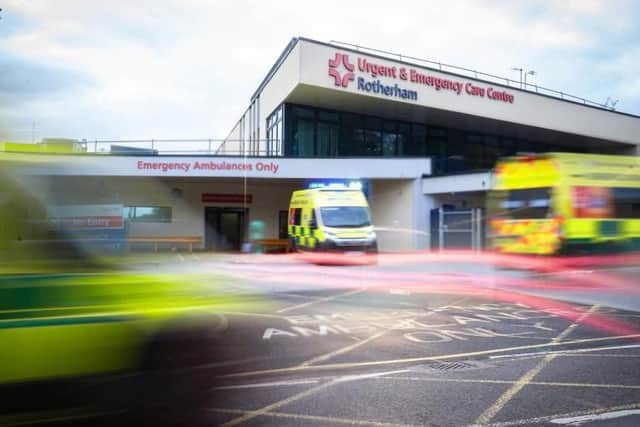

The Rotherham NHS Foundation Trust is asking patients to carefully choose the right NHS service for their needs in order to reduce pressure on the hospital’s urgent care centre.
Demand at the Urgent and Emergency Care Centre (UECC) is more than 20 per cent higher than three years ago.
This year saw the busiest day ever recorded at the centre, with 432 attendances on June 29.
With services already under pressure, the team are bracing themselves to tackle the additional challenges that typically come with winter, with colder weather and seasonal illness further increasing demand.
Jodie Roberts, Interim Chief Operating Officer at The Rotherham NHS Foundation Trust, said: “These figures demonstrate just how much demand for healthcare in Rotherham has grown.
"More than 111,000 people came through our Urgent and Emergency Care Centre last year and this summer we experienced some of our busiest days and months on record.
“But behind every one of those numbers is a person. It is someone who is worried about their health, a relative waiting with a loved one, or a patient who may need to be admitted to hospital and cared for on one of our wards. That is why we must never lose sight of the people behind the statistics.”
She urged people to think carefully about which service is best suited to their needs, as this may help to reduce the pressure on the UECC.
“We are preparing our services for the months ahead so that we can continue providing safe, high-quality care for our patients. But there is also something everyone in Rotherham can do to help.
“We will always be here for people who need urgent or emergency care. If you are seriously unwell or it is an emergency, please don't hesitate to seek help. We don't want anyone who needs us to be put off coming forward,” she said.
Increased demand on the emergency department has an impact across the wider hospital too, with ward teams taking over the care of people who are seriously unwell and need to be admitted.
Community teams also support people in their own homes, helping them to recover following hospital stays and helping people to avoid needing to go to hospital in the first place wherever possible.
Julie Roberts said: “It really is a team effort. A busy day in UECC isn't just felt by the colleagues working there. It can be felt right across our wards and into our community services.”
Despite pressures, there have been some positive developments in how patients are moving through the hospital. Average length of stay reduced from 5.2 days between April and September 2025 to 4.6 days during the same period in 2026.
“Reducing how long people need to stay in hospital, when it is safe and appropriate for them to go home, is really important for our patients as well as our services.
“The reduction we've seen in average length of stay reflects the work taking place across our hospital and community teams to help people receive the right care, recover and return home safely when they are ready,” said Ms Roberts.
“Choosing the right service isn't about asking people not to seek healthcare. It's about helping people get the right care, in the right place, while making sure our emergency teams are able to concentrate on the patients who need them most.
“Behind the numbers are thousands of people who need our help, and thousands of interactions between patients, families and our colleagues. We want to make sure we can continue to be there for every one of them throughout winter,” she added.
For illnesses and conditions that are not an emergency, other NHS services can often provide the right advice, treatment or support without the need to attend UECC.
People can:
Use NHS 111 online or call 111 if they need urgent medical help but are unsure which service to use
Speak to a community pharmacy for advice and treatment for a range of common conditions
Contact their GP practice for health problems that are not emergencies
Keep commonly used medicines at home and order repeat prescriptions in good time
Use 999 or attend UECC in an emergency
Information about when to use urgent and emergency services, including NHS 111, emergency departments (including Rotherham’s Urgent and Emergency Care Centre) and 999 is available on the NHS website.